


Logistics and Supply Chain Update – September 2026
UAE Accelerates Alternative Trade and Energy Corridors
The UAE is expanding alternative routes for energy exports and international trade as the conflict with Iran continues to disrupt regional security and shipping. Presidential adviser said the country intends to ensure that its economic activity and energy exports are not dependent on vulnerable routes affected by the conflict. For shippers, freight forwarders, and logistics companies in Dubai and across the UAE, these shifts are already reshaping ocean freight and air freight planning for the months ahead.
Infrastructure Expansion Beyond Vulnerable Routes
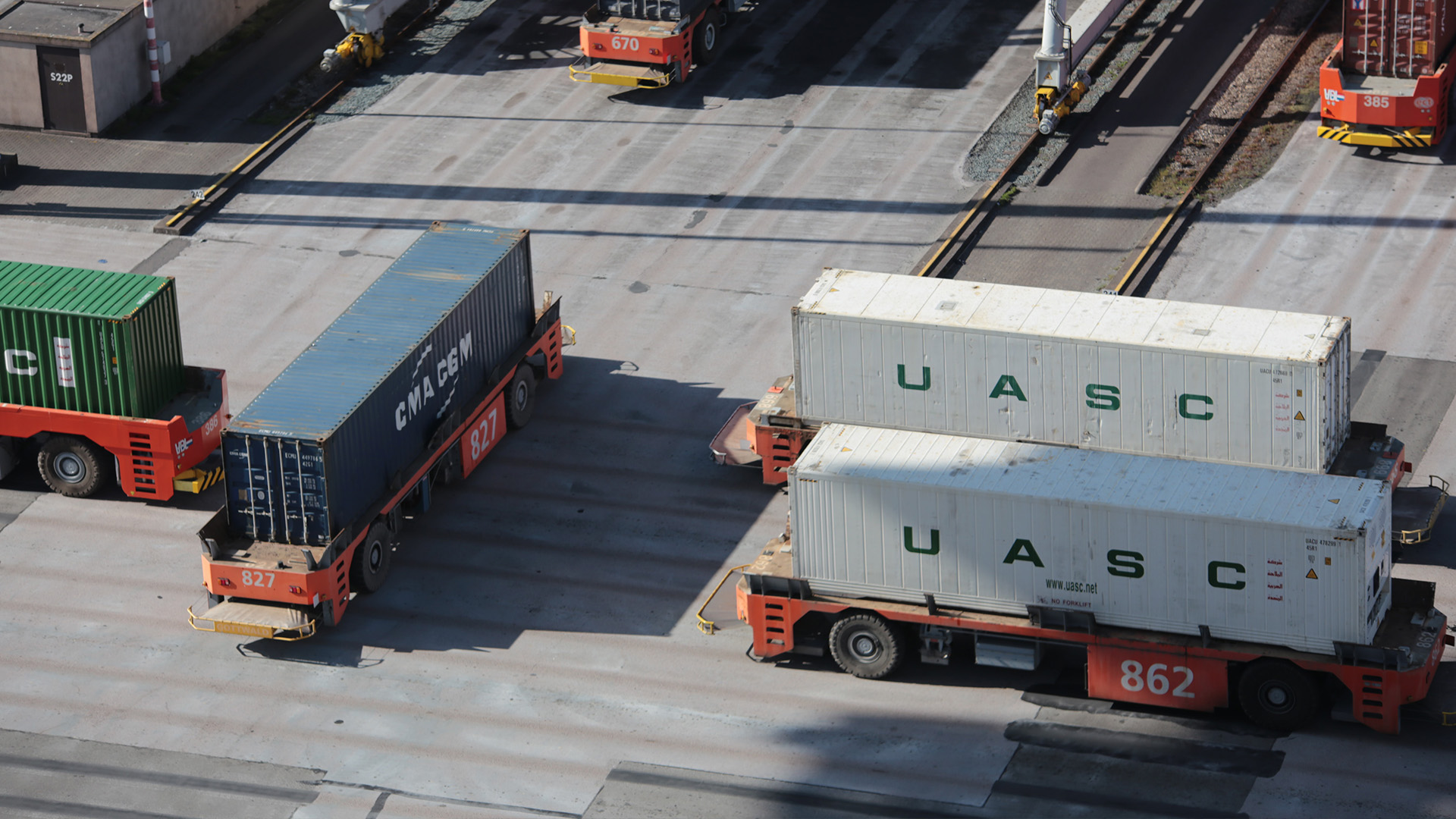
According to Presidential adviser, the UAE is increasing port capacity along its eastern coastline while developing additional pipelines, railway connections, and trade corridors. These investments are designed to provide alternative routes for exports and imports when traditional Gulf shipping channels face disruption, giving UAE import and export cargo more resilient options and supporting the wider network of shipping and logistics companies in Dubai that route freight through these gateways.
September 2026 Ocean Freight Update
Key | |
++ | Strong Increase |
+ | Moderate Increase |
= | No Change |
– | Moderate Decline |
— | Strong Decline |
This ocean freight update summarises how capacity and rates are moving across the UAE’s main trade lanes. If you need a current ocean freight quote or sea freight quote for a specific corridor, the direction of travel below explains the pricing pressure behind it.
Outbound
Middle East – Europe
Peak-season volumes and higher reefer imports are adding pressure to European inbound operations and available handling capacity.
Capacity – (-)
Rate – (+)
Middle East – Latin America
Inbound connectivity remains stable, supported by new and revised services linking Asia and Latin America.
Capacity – (+)
Rate – (-)
Middle East –Asia
Inbound demand is strengthening on selected Asia-Pacific trades as importers book earlier for peak-season needs, keeping ocean freight rates firm on eastbound sailings.
Capacity – (-)
Rate – (+)
Inbound
Asia – Middle East
Outbound conditions remain broadly stable, though network adjustments and weather disruptions may affect schedules.
Capacity: (=)
Rate: (=)
Europe – Middle East
Port disruptions and Middle East-related operational pressures are creating tighter conditions for European outbound cargo.
Capacity – (-)
Rate – (+)
Latin America – Middle East
Outbound networks remain stable, with seasonal service adjustments supporting regional and North American cargo flows.
Capacity – (=)
Rate – (=)
September 2026 Air Freight Market
Demand: Global air cargo demand rose 3.9% year-on-year in July, with international traffic up 4.7%.
Capacity: Global air cargo capacity increased 1.7%, trailing demand and lifting load factors to 46.0%.
News: Dedicated freighter traffic surged 13.9%, while belly-hold cargo fell 7.0% amid passenger disruptions.
The Middle East and Air Carriers
Middle East carriers recorded modest growth, with demand rising 1.7% YoY while capacity increased 4.0%, lowering the load factor to 44.1%. International demand grew 1.8%, but Europe-Middle East and Middle East-Asia corridors contracted heavily amid geopolitical disruption and network adjustments. For UAE shippers, this makes air freight incoterms and booking decisions more important when protecting time-critical cargo.
Asia
Asia Pacific air cargo demand increased 4.1% YoY, with capacity up 3.0% and load factor reaching 49.5%. International demand grew 5.2%. Asia-North America traffic expanded strongly, while Europe-Asia grew 3.1% but slowed sharply from June.
America
North America’s air cargo market was the strongest among major regions in July. Demand rose 4.8% YoY, while capacity fell 1.5%, lifting the load factor to 41.2%. International demand grew 7.1%, while the Asia-North America corridor expanded 9.2%.
Air cargo demand remained in growth territory in July, with international traffic accelerating from June. Latin America recorded the strongest percentage increase in capacity, but capacity grew faster than demand, causing cargo load factors to weaken.
Europe
Europe’s air freight market remained resilient in July, with cargo demand up 4.4% year on year and capacity rising just 1.3%. Europe-Asia traffic continued to grow, though at a slower pace, while belly cargo strengthened. Tight capacity and geopolitical disruptions continued to affect selected routes.
September 2026 Shipping Insights for the UAE
CMA CGM now mandates declaration, approval, and documentation for all lithium-ion battery shipments before loading. Read More
Kenya now requires valid ACD reference numbers before loading all containerized imports from September 2026. Read More
Maersk maintains Gulf booking restrictions, reroutes cargo, expands landbridge options, and imposes emergency freight surcharges. Read More
CMA CGM updates Jebel Ali-Fujairah landbridge procedures, tightening booking, documentation, customs, and container gate-in requirements. Read More
Maersk reinstates a $450 import drop-off charge for 20-foot containers returned in Zimbabwe from September. Read More
Maersk introduces instant online AME billing for late Bill of Lading amendments from September 2026. Read More
Maersk introduces Abu Dhabi congestion fees from September 15 for container sizes, inbound and outbound. Read More
Maersk revises cooling service export charges for Ikwiriri reefer shipments via Mombasa to global destinations. Read More
Maersk introduces import service fees for global shipments to Sohar, Oman, effective September 15, 2026. Read More
MSC introduces a $200 Emergency Equipment Charge on selected UAE imports due to regional equipment imbalances.
Maersk revises peak season surcharge for Far East Asia shipments to India and Pakistan ports. Read More
Maersk introduces a $500 peak season surcharge from East Africa to selected North European markets. Read More
Maersk increases peak season surcharge on Far East Asia shipments to Sri Lanka and Maldives. Read More
Maersk eliminates the $940 equipment positioning fee for 40-foot dry container imports into Zambia entirely. Read More
Maersk introduces optional digital services for supply chain risk, visibility, emissions management, with per-container charges. Read More
Maersk urges Latin American customers to promptly submit remittance advice to avoid payment processing delays. Read More
Maersk introduces Draft Billing for D&D, improving charge visibility and streamlining PRV and drop-off processes. Read More
Maersk launches worldwide Diamond cargo insurance for reefer shipments at $2,800, excluding Saudi Arabia. Read More
Maersk introduces storage charges for carrier-haul imports discharged at Khor Fakkan, including reefer plug-in costs. Read More
Global Factory Output – Overview
The Drewry World Container Index remained steady at $4,465 per 40ft container, as higher Transpacific rates were balanced by declines on Asia-Europe routes.
United States of America (USA)
U.S. private-sector growth accelerated in August, with Q3 GDP now projected at 3.0%. Stronger demand and hiring supported the expansion, particularly in services, which grew at the fastest pace since late 2024. Manufacturing remained stable but saw slower output and orders, while supply delays and price pressures continued.
United Kingdom (UK)
UK service activity improved in August as business and consumer spending recovered, driving the fastest output growth since April. Business confidence also strengthened, although inflation and geopolitical risks remained concerns. Rising fuel and transport costs pushed prices higher, while job cuts continued but slowed to their weakest pace since October 2025.
China
China’s services sector improved in August, with PMI rising to 51.4 as domestic demand, new business, and employment strengthened. Export growth remained modest, while cost pressures edged higher. Business confidence also recovered, supported by expansion plans and new projects, though overall growth remained moderate.
United Arab Emirates (UAE)
The UAE’s non-oil economy gained strong momentum in August, with the PMI rising to 55.3, its highest level since December 2024. Growth was supported by stronger demand, improved delivery times, easing cost pressures, and greater reliance on local suppliers. Firms also built inventories, although weaker employment signaled continued caution around longer-term expansion. This momentum continues to draw volume toward freight forwarding companies in Dubai and the free zones in UAE, reinforcing the country’s position as a regional trade and logistics hub.
Section Title
Related Articles
Logistics and Supply Chain Update – September 2026
UAE Accelerates Alternative Trade and Energy Corridors The UAE is expanding alternative routes for e
August 2026 | Supply Chain & Logistics Update
Ocean Freight Capacity Tightens Across Trade Lanes as Peak Season Supports Elevated Rates Ocean frei
Logistics & Supply Chain Market Update – July 2026
Fuel Market Update: Crude Prices Ease, but Fuel Costs Remain Elevated Crude Prices Decline as Risks


Post a comment
You must be logged in to post a comment.