


E-COMMERCE RETURNS MANAGEMENT SERVICES
The e-commerce business sector has been experiencing rapid growth in recent years. New e-commerce brands are emerging daily, with existing businesses expanding their distribution channels to dive into the e-commerce space. With 26 million e-commerce sites globally, a market value of $5.5 trillion, and a sales revenue of $3.6 trillion (as of 2021) – a 15.2% increase over the previous year, this sector yields high-profit margins.
However, running an e-commerce business is not easy, as it requires several management processes that ensure the smooth running of the business. One of these processes is the returns management or reverse logistics process. Returns are situations where customers reject or wish to return a product to the producer or distributor due to unmet expectations. It can also be due to the customer not being reachable or available at the point of delivery.
E-commerce returns management is the handling or management of e-commerce returns in a way to ensure a seamless process for the customer while also preventing losses for the company. This article will address returns management in e-commerce under the following sub-headings.
- 3 Pillars of E-commerce Returns Management
- How to do E-commerce Returns Management in UAE
- How E-commerce Return Management can help improve your business
- Types of Services we offer in E-commerce Return Management
- Why Choose us?
Now let’s dive in
3 Pillars of E-Commerce Returns Management
Speed
Speed is essential to the effectiveness and efficiency of your return management process. It ensures customer satisfaction and prevents business losses by sending the returned products back to the warehouse shelves in the shortest possible time to minimize damage to the goods at the receiving dock.
Various processes in return management such as Return Material Authorization (RMA), can be automated for faster processing speed and streamlining of the return management process. Other tools used to achieve speed include labels and attachments and user profiles.
Control
This involves proactiveness in overseeing the flow of inbound and outbound materials within the supply chain. Proactiveness can be achieved by keeping records of receipts and informing concerned parties about inconsistencies in products. Control over return management in e-commerce also entails product reconciliation, regulatory compliance, and quality assurance.
Visibility
You can enhance visibility by obtaining product information before receiving and processing a return. Some ways that can be used to gather this information include cloud-based portals, carrier integration, and barcode identifiers. These tools simplify access to necessary information, improving visibility and allowing shipment receivers to prepare the resources for product reception.
How to do E-Commerce Returns Management in UAE
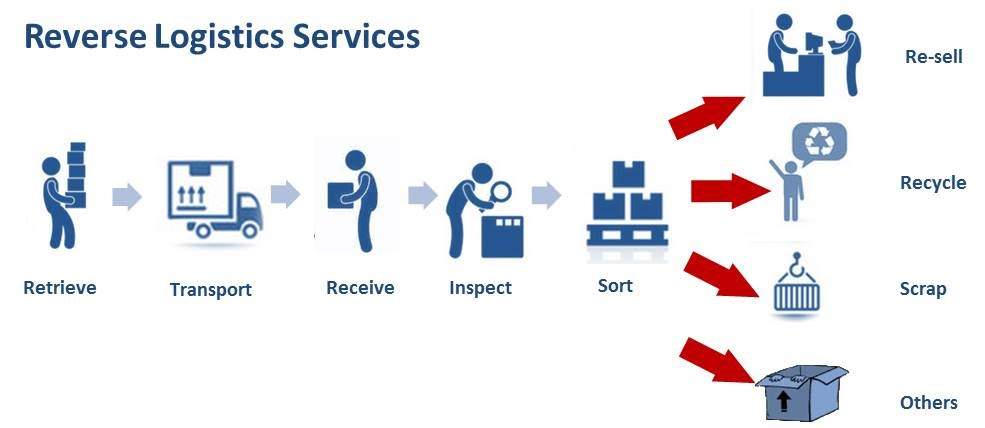
The e-commerce returns management process involves a series of steps and other smaller processes that make up the whole process. Let us look at the various processes and some management tips on the practice of returns management.
The process
The various steps involved in e-commerce returns management are
The customer receives the product and is dissatisfied
Customer dissatisfaction can be due to damaged or defective products, products not meeting customer expectations, late delivery, buyer remorse, price issues, etc. Afterward, he contacts the brand to request a product return through the right channel.
Brand Examines the Return Request for a Pass or Denial
After the customer requests a return, the company decides whether the request is approved or denied based on the company’s return policy. An approved request is processed further to exchange product or refund customer.
Brand Retrieves Product from the Delivery Address
Optimization of delivery and pick-up routes can be difficult to achieve internally. However, a 3PL service provider would help optimize the routes using prepaid shipping return labels and other techniques that require receiving via dark stores .
Products get back to the Warehouse for Sorting and Inspection
The retrieved product is then transported to the warehouse or a dedicated sorting facility, where it is sorted, organized, and inspected for quality. This is done by an auditor who tries to answer questions such as why the product was returned, if it was damaged, if it’s good enough for restock, etc.
Restocking
Returned products in good condition will be restocked, added back to inventory count, and made available for resale. Bad or damaged ones can either be refurbished or recycled, and then sent to the warehouse shelves.
Management Tips
Setting Down Reverse Logistics from the Onset
Returns are inevitable in business. As such, it’s best to plan for them from the onset of the business. Put in place return management or reverse logistics e-commerce system that effectively takes care of all your returns, ensuring customer satisfaction while maintaining business profits.
Employ Returns Management Software
Integrating return management software into your supply chain would help automate various processes in your returns management, improve coordination, streamlines the whole process, and increase the efficiency of returns management.
Use a 3PL
This involves outsourcing your returns management to a 3PL company. A returns manager will oversee the entire returns management process, ensuring effective communication with the customers, vendors, and employees while also managing the employees involved in the process. Using a returns manager gives you time to focus on other aspects of the business for better profitability and makes the process more efficient.
How Ecommerce Return Management Can Help Improve Your Business?
Although e-commerce returns management can be demanding, this process helps your business in various ways. Below are some benefits you stand to gain with the use of e-commerce returns management
Enhance Brand Loyalty
Effective returns handling will keep your customers happy and make them want to continue business with you. Statistically, 92% of consumers said they would return to buy again if the returns process were easy and seamless. This means improved brand loyalty and more profits.
Retain Customers
Customers prefer to patronize businesses that do not offer swift and seamless return services. A favorable return policy for them as part of the management system would help you retain customers. Furthermore, ineffectiveness in the returns management will make them seek to take their money elsewhere.
Circular Economy with Restocking and Resales
E-commerce returns management will help send your returned products back to the warehouse shelves for resale. Effective and efficient returns management ensures seamless returns processing and quick restocking of returned goods to warehouse shelves for resale.
Improve Customer Satisfaction
The way you handle returns will determine if your customers end up satisfied or not. Proper handling of returns will cover the poor customer experience due to the defective product or other reasons. Customer satisfaction can be boosted by offering full refunds, not requiring original packaging, etc., and making the process seamless while ensuring speedy returns processing.
An efficient return management process would result in satisfied customers and improve their chances of returning, leading to more sales and better profits.
Why Choose Us?
Al Sharqi offers various returns management services and e-commerce return solutions, giving you an advantage over your competitors and keeping you ahead in your industry. Below are some of the benefits you gain from using our services.
High Level of Expertise In Reverse Logistics
We have a team of well-trained professionals who are very knowledgeable in return management. This will enable us to give you the best e-commerce reverse logistics services, ensuring that your returns are handled with maximum efficiency for wider profit margins.
Cost Optimization
We ensure that your return management processes are optimized to reduce cost and produce maximum results. With our cost optimization strategies, you can be sure to get the best results at minimum costs. Thereby, maximizing profitability and giving room for business growth.
Minimized Loss of Inventory
We ensure that returned goods are processed as quickly and efficiently as possible, minimizing inventory loss. We also use various software and automation to make the process seamless and minimize inventory loss.
High-end WMS Software
We employ various high-end warehouse software to strengthen your return management, improve customer loyalty, ensure efficient returns processing, and reduce the cost of processing returns.
Optimized Product Journey Routes
We help optimize your product journey by identifying customer pain points and letting you know the customer experience in using your product. This exposes the potential problems that lead to product return and help you provide solutions to solve those problems. Thereby, reducing the return rate and improving profit margins.
Higher Efficiency
The sum effect of all the above listed is a generally increased efficiency in return management. This translates to better customer experience and reduced losses, helping you stay profitable and competitive among competitors.
Our customer service team is happy to assist you with planing your next booking.

Related Articles
E-Commerce Fulfillment Services
E-commerce fulfillment services are a fast-growing aspect of the shipping industry. This is due to t
B2C FULFILLMENT SERVICES
Different business models exist in the global business space including in the UAE. However, business
SHIPPING AND FULFILLMENT SERVICES IN UAE
Shipping refers to the physical movement of goods or products from one location to another, e.g. the
Post a comment
You must be logged in to post a comment.