

Home » Supply Chain and Logistics Update – November 2026
Supply Chain and Logistics Update – November 2026

Supply Chain and Logistics Update – November 2026
UAE Trade Maintains Double-Digit Growth Despite Global Economic Pressures

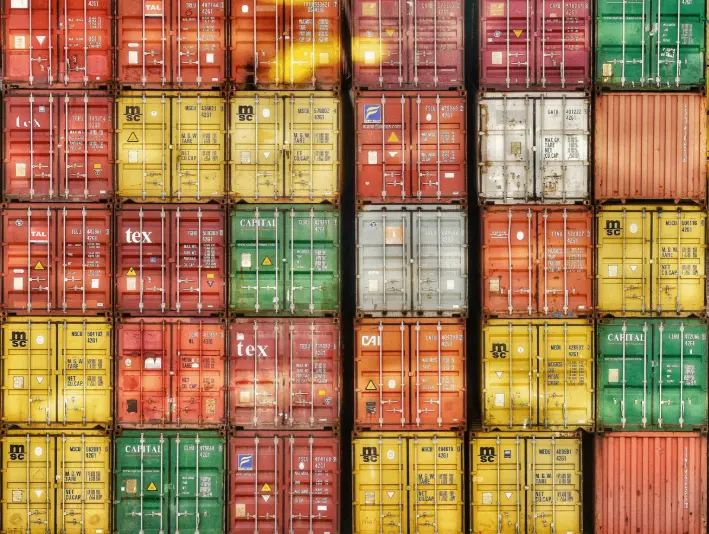
Stacked international shipping containers representing global container shipping, ocean freight logistics and international trade.

The UAE recorded double-digit foreign trade growth during the first nine months of 2026, demonstrating economic resilience despite geopolitical tensions and global market uncertainty.  

Expanding Port Capacity and Rail Connectivity

The UAE continues strengthening its logistics infrastructure to support uninterrupted trade flows and reduce exposure to regional supply chain disruptions. Investments include expanding port capacity along the eastern coast, particularly in Fujairah and Khorfakkan, while leveraging Etihad Rail to improve inland cargo movement and connectivity. 

These developments aim to diversify transport corridors, improve logistics efficiency and provide businesses with alternative routes during periods of disruption.

Strengthening International Trade Partnerships

The UAE is expanding its international economic relationships through Comprehensive Economic Partnership Agreements (CEPAs) and other trade initiatives. These partnerships support market access, investment opportunities and stronger commercial relationships with global trading partners. 

The country also maintains a significant international logistics presence, with UAE companies involved in managing more than 140 ports and 30 airports worldwide.

Outlook for UAE Trade and Logistics

With foreign trade maintaining strong momentum, the UAE remains focused on infrastructure investment, diversified trade corridors and international partnerships. 

Continued improvements in port capacity, rail connectivity and trade financing are expected to support supply chain resilience, facilitate cargo movements and strengthen the country’s position as a leading global trade and logistics hub.

Ocean Freight Market Overview – November 2026

Large container ship transporting international cargo across the sea, representing ocean freight shipping and global supply chains.

Key 

++ 

Strong Increase 

+ 

Moderate Increase 

= 

No Change 

– 

Moderate Decline 

— 

Strong Decline 

Outbound

Middle East – Europe

European ocean imports faced weather-related congestion and capacity constraints, while post-holiday Chinese cargo recovery and Rotterdam disruptions challenged operations. 

Capacity – (=) 

Rate – (-) 

Middle East – Latin America

Latin America maintained stable inbound ocean freight activity, supported by regular Asian services and expanded North American shipping connections. 

Capacity – (=) 

Middle East –Asia

Asia Pacific ocean imports experienced temporary sailing disruptions, while improving port operations and Suez Canal routing supported gradual recovery. 

Capacity – (=)

Middle East – North America

North American ocean imports faced strong demand, tight vessel capacity and shipping delays, particularly across Transpacific and Mediterranean routes. 

Capacity – (-) 

Rate – (-)

Inbound

Asia – Middle East

Asia Pacific ocean exports faced temporary capacity constraints and sailing disruptions, while improving port operations supported gradual schedule recovery. 

Capacity: (-)

Europe – Middle East

European ocean exports remained broadly stable despite vessel schedule adjustments, Baltic network optimization, Rotterdam cargo disruptions and Valencia rail restrictions. 

Capacity – (=) 

Rate – (-) 

Latin America – Middle East

Latin American ocean exports maintained steady connectivity, supported by expanded shipping services and agricultural demand despite weather-related port disruptions. 

Capacity – (=) 

North America – Middle East

North American ocean exports gained improved Central American connectivity through Maersk’s expanded GOEX service, offering additional gateways and inland connections. 

Capacity: (=) 

November 2026 Air Freight Market Insights

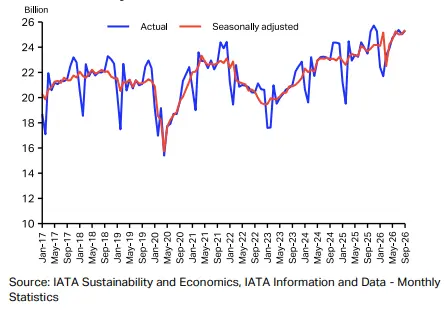
Global air cargo demand trends in 2026 showing actual and seasonally adjusted international air freight volumes from IATA.

Demand: Global air cargo demand increased by 7.7% year-on-year in September 2026, with international demand rising 8.6%. 

Capacity: Global air cargo capacity expanded by 2.7% year-on-year, with demand growing faster than available capacity. 

News: Global air freight growth was driven by strong Transpacific demand, particularly for AI infrastructure, semiconductors and technology equipment. North America and Asia Pacific led regional growth, while geopolitical disruptions continued affecting Middle Eastern trade corridors.

The Middle East and Air Carriers

Middle Eastern airlines recorded 3.8% growth in cargo demand, while capacity increased 7.0%, reducing the cargo load factor to 44.0%. Despite recovering airline activity, geopolitical disruptions continued affecting regional connectivity. Middle East–Asia cargo traffic declined 10.2%, while Europe–Middle East volumes fell 18.0%, marking seven consecutive months of contraction on both corridors. 

Asia

Asia Pacific carriers recorded 8.6% growth in cargo demand, while capacity increased 4.9%, lifting the load factor to 50.7%. International demand rose 10.0%, supported by technology-related shipments. Asia–North America cargo volumes surged 17.0%, driven by semiconductors, servers and AI infrastructure equipment, while Europe–Asia traffic grew 6.0%. 

America

North American carriers recorded the strongest cargo demand growth at 11.8%, while capacity increased just 0.8%, raising the load factor to 43.9%. International traffic surged 15.3%, supported by Transpacific technology shipments. 

Latin American and Caribbean airlines recorded 6.7% cargo demand growth, alongside a 7.6% capacity increase. Their cargo load factor declined slightly to 34.3%, indicating that capacity expanded faster than demand.

Europe

European airlines recorded 4.5% cargo demand growth, while capacity declined 1.6%, raising the load factor to 54.6%. International traffic expanded 4.6%, although growth moderated from August. Europe–North America cargo volumes increased 9.3%, while Europe–Asia traffic grew 6.0%. Reduced low-value ecommerce shipments contributed to slower growth on Asia–Europe routes.

November 2026 Shipping Insights for the UAE

CMA CGM opened Jebel Ali–Fujairah landbridge export bookings, introducing strict documentation, customs procedures, container limits and operational deadlines. Read More 

Gulftainer may transfer uncollected containers from Khorfakkan Terminal to Sajaa Dry Port after three days, with consignees bearing costs. Read More 

Maersk warns heavy rainfall and flooding across East Africa could disrupt inland transport, port operations and cargo schedules. Read More 

CMA CGM UAE revised customer service hours effective October 19, 2026, with emergency support restricted to urgent operational matters. Read More 

Maersk enhanced its ME2 and AE12 services, adding Jeddah and Colombo connections to strengthen Europe, Saudi Arabia and Asian trade routes. Read More 

Gulftainer introduced mandatory truck diversions via Dibba Road at Khorfakkan Terminal to reduce congestion and improve cargo movement. Read more 

CMA CGM mandates consignee registration, Waybill of Lading, prepaid charges and Free Out terms for India-bound SOC shipments. Read More 

Maersk revised Europe–South Africa peak season surcharges effective October 29, setting $225 for 20ft containers and zero for larger containers. Read More 

 Maersk Kenya will relocate its Nairobi office to Purple Tower on November 16, 2026, maintaining uninterrupted services and customer support. Read More 

Maersk introduced peak season surcharges for reefer shipments to Tema, Ghana, charging $300 for 20ft and $600 for 40ft containers. Read More 

Maersk reduced Middle East–West Africa emergency surcharges by $500 per dry container for shipments moving from the Middle East to West Africa. Reefer container rates remain unchanged. Read More 

CMA CGM increased Asia–Mediterranean and North Africa FAK rates, effective November 15–30, 2026, ranging from $4,300 to $7,500. Read More 

Global Factory Output – Overview

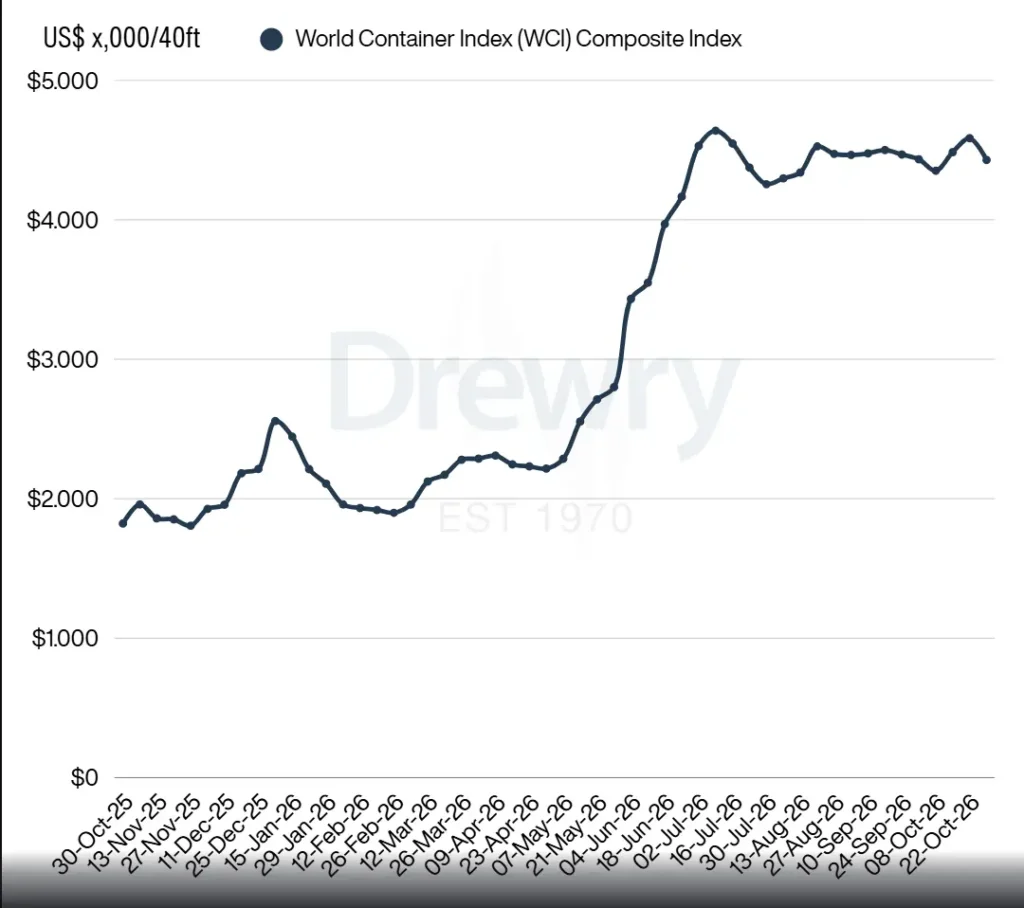
Drewry World Container Index chart showing global ocean freight rates per 40-foot shipping container from October 2025 to October 2026.

Drewry’s World Container Index fell 3% to $4,429 per 40ft container, primarily driven by declining Transpacific freight rates.

United States of America (USA)

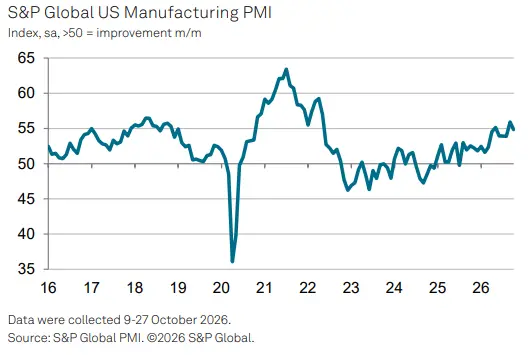
US manufacturing PMI chart tracking factory business conditions and manufacturing sector activity through October 2026.

US manufacturing expanded strongly in October, driven by rising demand for AI-related equipment and increased hiring. However, supply chain disruptions and shipping delays constrained production. Higher energy costs pushed selling prices upward, raising inflation concerns and increasing pressure on the Federal Reserve. 

United Kingdom (UK)

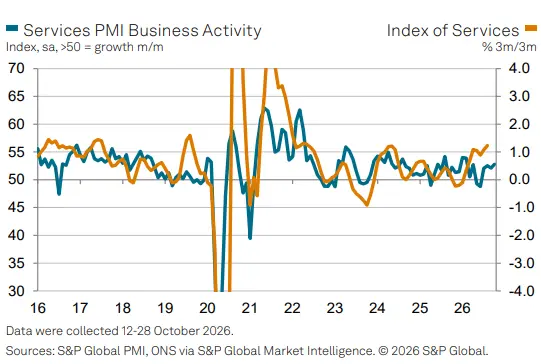
UK services PMI business activity chart compared with the Index of Services, showing economic trends through October 2026.

UK service sector activity accelerated in October, supported by stronger demand, AI-related investment and improving business confidence. Employment rose modestly, while higher fuel, transport, wage and energy costs intensified inflationary pressures, increasing expectations of further Bank of England interest rate hikes. 

China

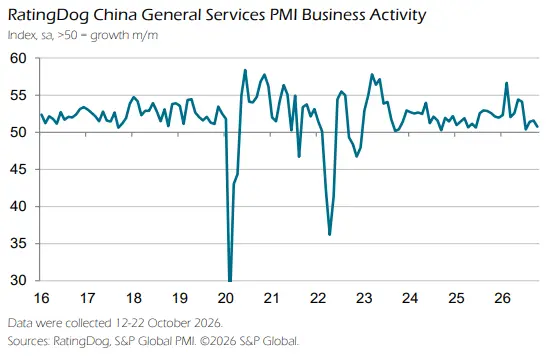
China services PMI chart showing RatingDog business activity trends through October 2026 and changes in the Chinese economy.

China’s services sector expanded more slowly in October, with PMI falling to 50.8 despite solid new orders and continued hiring. AI-driven efficiencies helped reduce backlogs, while rising input costs and competitive pricing pressured profitability. Business confidence weakened amid growing cost concerns. 

United Arab Emirates (UAE)

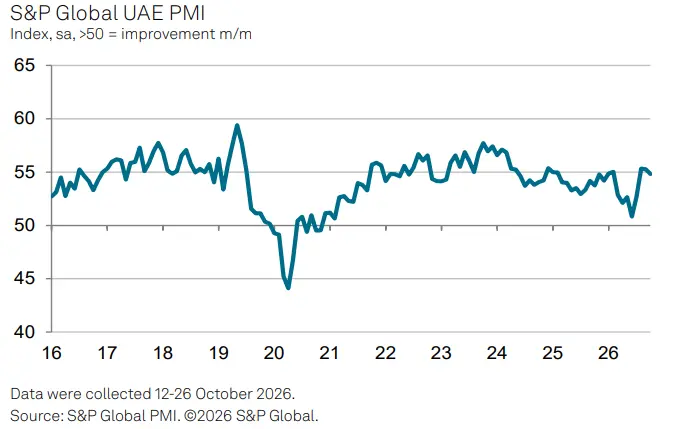
UAE Purchasing Managers' Index chart showing private sector business activity and economic growth trends through October 2026.

UAE non-oil businesses faced record selling price increases in October as rising fuel and material costs intensified inflation. Stronger orders strained capacity, while employment declined. Despite cost pressures, business confidence improved, supported by stronger demand, better supplier performance, and increased purchasing activity. 

Section Title

Supply Chain and Logistics Update – November 2026
UAE Trade Maintains Double-Digit Growth Despite Global Economic Pressures The UAE recorded double-digit foreign trade growth during the first nine months of 2026, demonstrating economic resilience...

Supply Chain and Logistics Update – October 2026

UAE Pushes for Deeper Gulf Industrial Integration The UAE is seeking closer industrial co-operation with GCC countries to strengthen regional supply chains, support economic diversification, and...

Logistics and Supply Chain Update – September 2026

UAE Accelerates Alternative Trade and Energy Corridors The UAE is expanding alternative routes for energy exports and international trade as the conflict with Iran continues to disrupt regional...

August 2026 | Supply Chain & Logistics Update

Ocean Freight Capacity Tightens Across Trade Lanes as Peak Season Supports Elevated Rates Ocean freight capacity is tightening across several secondary trade lanes as peak-season demand, carrier...

Logistics & Supply Chain Market Update – July 2026

Fuel Market Update: Crude Prices Ease, but Fuel Costs Remain Elevated Crude Prices Decline as Risks Ease Brent crude fell below pre-conflict levels, reaching USD 72.49 per barrel on 3 July 2026, down...

IOR & EOR – Importer on Record / Exporter on Record

Understanding the role of IOR and EOR services in UAE and GCCis essential for businesses moving goods across borders. Importer of Record (IOR) and Exporter of Record (EOR) services ensure that...

Supply Chain & Logistics Update – June 2026

India‑Oman CEPA Enters into Force The India‑Oman Comprehensive Economic Partnership Agreement (CEPA) officially entered into force on June 1, 2026, marking a fresh chapter in bilateral economic ties...

ECommerce Return Management Services- Complete Guide

The rise of online shopping has significantly increased e-commerce returns in the UAE, directly impacting profitability, operational costs, and customer satisfaction. Globally, return rates for online...

FMCG Freight Management Services in UAE

The fast-paced nature of FMCG products, with short shelf lives, high turnover, and extensive distribution networks, makes efficient freight management services in the UAE crucial for business success...

Tags: Update

Related Articles

Post a comment