


How Shippers Cope with Increasing Sea Freight Rates in a Bull Market?
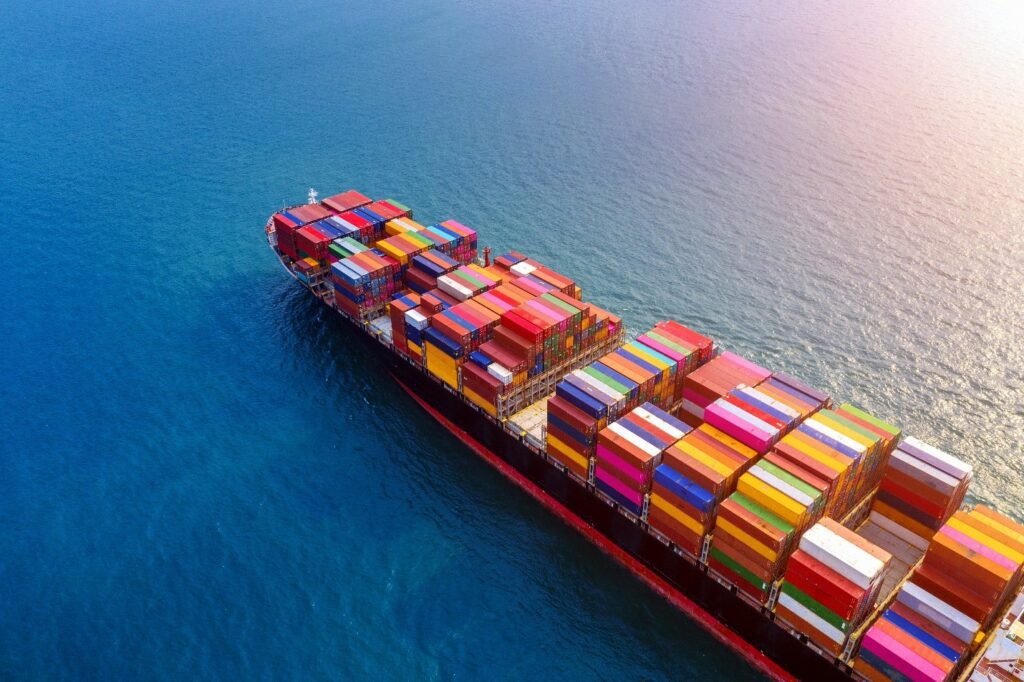
When demand for container space outpaces the capacity available to move it, ocean carriers gain pricing power and sea rates in bull market conditions climb, sometimes sharply, sometimes for months at a time. If your last few freight quotes have jumped without warning, you’re not imagining it: current bull market sea rates are being shaped by a mix of tight vessel capacity, port congestion, and geopolitical disruption that has repeated in waves since 2024, most recently with a Middle East escalation in early 2026 that pushed Asia–Europe and transpacific spot rates well above their prior baseline.
This guide explains what a bull market in ocean freight actually is, what’s driving bull market shipping rates today, and more importantly, what UAE shippers, importers, and freight buyers can actually do about it.
What Is a Bull Market in Sea Freight?
A bull market in sea freight happens when demand for vessel space exceeds available capacity over a sustained period, not just for a week or two. Carriers respond by raising spot rates, tightening allocations, and during the sharpest phases adding surcharges tied to congestion, fuel, or route diversions.
Unlike a short-lived spike around a single holiday, a genuine bull cycle reflects a structural imbalance: fewer usable vessel slots relative to cargo volume, caused by some combination of strong demand, longer voyages (due to rerouting), and ports that can’t process ships as fast as they arrive. Understanding the influence of bull market on sea rates matters because the drivers behind a spike determine how long it’s likely to last and what a shipper can realistically do about it.
What are the Factors Increasing Sea Freight Rates in a Bull Market?
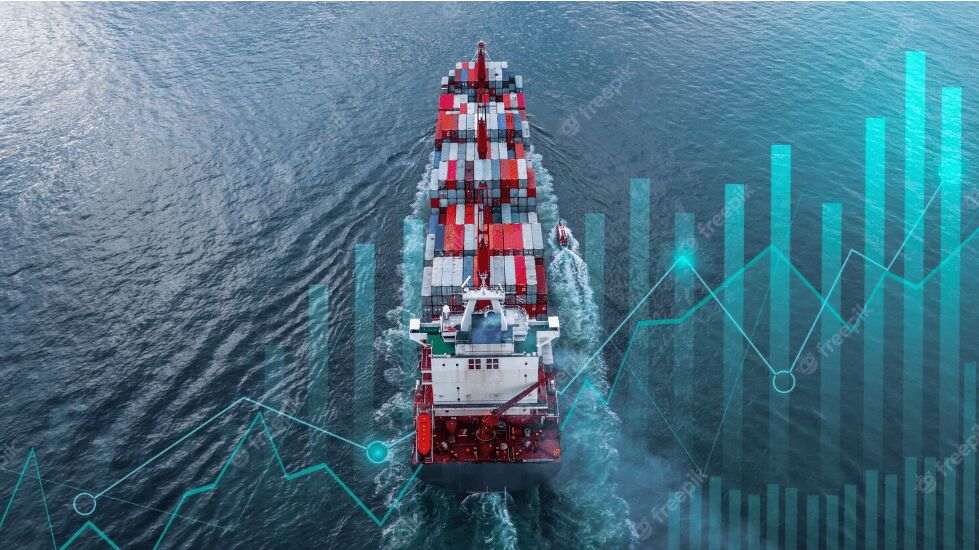
Several forces tend to layer on top of each other during a bull cycle. None of them act alone that’s part of what makes bull market sea rates impact so hard to predict from a single headline.
1. Increased Global Demand for Goods and Shipping Services
Demand is a primary force or determiner in any market. It is a product of consumer needs, preferences, and overall activities. When there is increased demand, it directly results in high demand for shipping services because the goods need to be transported or distributed to meet consumer needs.
An overlap of high demand and shipping services in UAE will trigger more operational costs and effort for the shipping lines. There is a need to compensate for this rise in operational costs and efforts. As a result, shipping carriers and other players tend to charge more fees. A good example is what is experienced in peak seasons leading to peak season surcharges (extra cost).
2. Demand Outpacing Available Capacity
The most basic driver: more cargo wants to move than there is vessel space to carry it. This shows up first and hardest on high-volume corridors; Asia–Europe, Asia–UAE, and UAE–U.S. lanes are typically the first to feel rising sea rates in bull market conditions, because that’s where the imbalance between booked space and available space is widest.
3. Capacity Constraints and Equipment Shortages
Vessels run on fuel and their prices are not always stable. Shipping lines need to procure a sufficient quantity of fuel to mitigate the impact of price fluctuations. When fuel prices are high, it pushes up ocean freight rates. In such cases, the Bunker Adjustment Factor (BAF) is the driver of fuel surcharges to compensate for the price fluctuation.
4. Port Congestion vs. Vessel Capacity: Why Both Matter
It’s a common misconception that congestion and capacity shortage are the same problem. They’re not, and the distinction matters for planning. Vessel sizes have grown substantially over the past decade, ships carrying 18,000–24,000+ TEUs are now routine on major trades but many ports haven’t expanded berth and yard capacity at the same pace. The result: even when the number of ships looks adequate, congestion at major transshipment hubs can absorb five to ten percent of effective capacity through waiting time alone, according to maritime logistics analysts tracking Asia–Europe corridors. That capacity doesn’t disappear from the fleet, it disappears into queues.
This is a structural issue, not a seasonal one. It’s one reason bull market effect on maritime shipping conditions can persist even after a specific triggering event (like a canal closure) is resolved.
5. Geopolitical Disruption and Route Diversions
Since late 2023, Red Sea vessel attacks pushed most carriers to reroute around the Cape of Good Hope instead of the Suez Canal, adding roughly two to three weeks of transit time in each direction depending on the origin and destination. In February 2026, a broader Middle East escalation added a second, more severe disruption affecting Strait of Hormuz transits and suspending Suez Canal passage for a period which pushed spot rates on some transpacific and Asia–Europe lanes to levels well above the post-Red-Sea baseline and forced some time-sensitive cargo onto already-constrained air freight capacity.
Every added week of transit effectively removes a vessel from the available pool for that many more days, tightening capacity network-wide which is why a regional conflict thousands of kilometers from a UAE warehouse can still move a quote.
6. Seasonal Peaks Layered on Top of a Bull Cycle
Predictable seasonal surges, pre-holiday retail restocking, Lunar New Year front-loading, festival shipment cycles, tighten capacity further when they land inside an already-strained bull cycle. The result is often a sharper, faster spike than either factor would cause alone. Shippers who track seasonality specifically within the current cycle can time bookings or shift to alternative routings before the tightest weeks hit.
7. Fuel Costs and Emerging Decarbonization Surcharges
Bunker fuel is one of the largest operating costs for a carrier, and price swings feed directly into bull market freight costs through fuel-related surcharges. On top of ordinary fuel volatility, international shipping is now working toward the International Maritime Organization’s target of net-zero greenhouse gas emissions by around 2050, with interim checkpoints in 2030 and 2040. That means emissions-linked costs are becoming a more permanent layer in freight pricing rather than a temporary pass-through, worth budgeting for even after a specific fuel spike passes.
8. Carrier Pricing Strategy and Blank Sailings
Carriers manage a tight market with more than just rate increases. Blank sailings skipping a port call or cancelling a voyage outright, are a standard tool for controlling capacity and defending rate levels during a surge. Combined with General Rate Increases (GRIs) and peak season surcharges, this gives carriers several simultaneous levers, which is part of why bull market maritime rates can move quickly and with limited notice to shippers.
How Sea Freight Rates Are Calculated in a Bull Market?
Spot Rates vs. Contract Rates
Spot rates track current market conditions in near real time and can rise fastest during a bull cycle, they’re typically used for one-off shipments or urgent capacity needs. Contract rates are negotiated in advance (often quarterly or annually) and offer more budget predictability, but they can lag a fast-moving spot market if renegotiated infrequently.
It’s worth noting: most global container volume actually moves under negotiated contracts, not spot bookings, spot-market headlines can make the average shipper’s cost look more volatile than it typically is. Still, shippers with meaningful spot exposure feel bull market sea rate trends first and hardest.
| Rate approach | Best suited for | Main advantage | Main risk |
|---|---|---|---|
| Long-term / seasonal contract | Predictable, recurring volume | Budget visibility, protected space | May sit above spot if the market softens |
| Spot rate | Irregular or opportunistic volume | Flexibility when the market is soft | Rate and space can change with little notice |
| Blended portfolio | Most mid-size and large shippers | Balances cost control with flexibility | Requires active, regular review |
There’s no single “correct” split, it depends on how predictable your volume is, how tight your delivery commitments are, and how much rate risk your margins can absorb. As a general planning guide (not a guarantee): shippers with highly predictable, business-critical volume often protect the majority of it through contracts, while shippers with more seasonal or uncertain flows keep a larger share flexible and accept more spot-market exposure.
Trade Lane and Container-Type Differences
Not every corridor behaves the same way in a bull market. High-volume lanes like Asia–Europe can see sharper spikes than secondary routes simply because there’s more competition for the same limited space. Asia–UAE, UAE–Europe, and UAE–U.S. lanes each move somewhat independently depending on regional demand and port efficiency,a rate spike on one doesn’t automatically mean the others move the same amount.
Container type and size also affect pricing. A 40ft high-cube container generally offers more usable capacity than a standard 40ft box, so it can carry a premium precisely because that extra space is more valuable when capacity is scarce.
Full container load vs. LCL matters more in a tight market than in a soft one. When space is scarce, FCL shipping gives a shipper a dedicated, predictable slot rather than competing for co-load space, which is why demand for FCL shipping services tends to rise specifically during a bull cycle. For UAE businesses, FCL shipping Dubai is usually the more reliable option once LCL consolidation windows start slipping. Not every cargo profile fits a standard box, either project cargo and oversized loads typically move through breakbulk cargo services to Port of Mesaieed rather than a container at all, and working with an experienced breakbulk freight forwarder to Port of Mesaieed matters even more when general container capacity is already stretched. Similarly, routes with less carrier density such as FCL shipping solutions from Iraq can tighten faster than mainline Asia–Europe lanes during the same bull cycle, simply because there are fewer alternative sailings to fall back on.
Surcharges Shippers Often Miss
Beyond the base ocean rate, bull-market quotes often carry peak season surcharges, congestion premiums, bunker-related charges, and equipment imbalance fees. These aren’t always broken out clearly in an initial quote, ask for an all-in cost breakdown that separates the base rate from origin/destination charges, documentation fees, and fuel-related add-ons, so you’re comparing like with like across providers.
How to Track Current Bull Market Sea Rates?
You don’t need to guess. A handful of published indexes track spot-rate movement across major trade lanes in near real time, including the Shanghai Containerized Freight Index (SCFI), the Drewry World Container Index (WCI), and the Freightos Baltic Index (FBX). Checking one of these before finalizing a booking or a contract renewal gives you a live read on bull market sea rates analysis rather than relying on a quote that may already be a week stale rates on the most active lanes have moved by double digits within a single week during peak surges.
Strategies to Cope with Increasing Sea Freight Rates
An increase in sea freight rates is a situation that is almost inevitable. However, you must find a way to cope to reduce the effect of the increasing rate on your business. Here are some strategies that can help you.
1. Negotiate Long-term Contracts and Rate Agreements
Long-term contracts and rate agreements are ideal for curbing the impact of increasing ocean freight rates. Since this agreement covers a long period, you can easily take advantage of the current rates and solid common ground in the case of a rate increase in the future.
Here are two scenarios you can employ in this agreement.
2. Demand Outstrip Capacity
This is a situation where there are several cargoes ready for shipment but not enough space or a shortage of vessels. Let your agreement cover this situation with the shipping carrier assuring space for your cargo. A flat fee can be agreed upon for this situation.
3. Demand is Lower than Capacity but still in a Bear Market
Rates tend to be lower or stable when there is enough or more than enough capacity for the current demand. The agreement should cover this situation.
4. Building Strong Relationships with Shipping Carriers and Freight Forwarders
A strong relationship with shipping carriers and forwarders will be of immense advantage to you. By virtue of a strong relationship, you’ll enjoy the following.
- Favorable/market competitive rates
- Ship carriers and forwarders will make your cargo a priority
- Better efficiency and flexibility
5. Exploring Alternative Shipping Routes and Modes
An increase in ocean freight rate may be due to restrictions or unfavorable conditions in a shipping route. In this case, you can change to an alternative route where the conditions are favorable.
If the case is a general factor with ocean freight, you can use other modes such as air freight till rates become better.
6. Optimizing Cargo Consolidation and Container Utilization
Consolidation can help out in times of high rates. You can merge your cargo with that of other shippers and load it onto a container. This way, you all share the cost. Consolidation can also optimize container utilization in times of shortages, hence reducing the impact of extra charges.
7. Implementing Effective Supply Chain Planning and Forecasting
The occurrences of ocean freight rate increase should no longer be news as it is frequent in the industry. So, there should be a workable plan in place that involves how your goods move down the supply chain. This plan will include studying the market to predict times of rate increase. You can employ the help of experts to create an effective supply chain framework and forecast for cost.
8. Leveraging Technology and Data Analytics to Optimize Shipping Operations
Technology is indispensable at this time when businesses seek efficient processes. With technological applications, you can take advantage of the following and minimize the impact of freight rates.
- Route optimization: It can dig into the historical information of shipping routes and this can be used to pick the most efficient option.
- Data analytics: It will help study and analyze the market conditions, demand, and supply dynamics to help predict times of possible rate increases.
All these findings will help you know the best time to ship or plan your shipment in the long run.
How a Bull Market Ripples Through Supply Chain Operations?
A bull market doesn’t stop at the freight invoice, it reshapes planning further down the chain:
- Extended booking lead times. When space is tight, last-minute bookings become expensive or simply unavailable.
- Harder inventory forecasting. Rapid rate swings make it difficult to budget landed cost with confidence.
- More working capital tied up in logistics, leaving less room for other investment.
- Higher risk of customer chargebacks if freight cost increases aren’t anticipated or passed through in commercial terms.
These effects are why treating a bull cycle purely as a “freight problem” tends to underestimate its actual cost, the bull market impact on shipping industry operations touches inventory, cash flow, and customer commitments, not just the shipping line item.
Building a Procurement Strategy for a Bull Market
Rather than a single contract-or-spot choice, a more resilient approach tiers cargo by urgency and predictability:
- Protected base — stable, high-value, customer-committed cargo goes under contract allocation.
- Flexible middle — cargo that’s real but not schedule-critical uses index-linked pricing or shorter rolling agreements.
- Tactical overflow — uncertain volume, opportunistic purchases, or cargo that can wait uses the spot market.
- Premium reserve — a controlled, deliberately small budget set aside for genuinely urgent cargo where the cost of delay exceeds the cost of a premium rate.
Reviewing this mix monthly not just once a year at tender time, is what separates shippers who ride out a bull cycle from those who get caught flat-footed by it. Questions worth asking on that review: Is actual volume tracking near the contracted commitment? Are spot rates materially above or below the contracted level? Has a route diversion changed transit-time assumptions enough to affect inventory buffers?
Practical Cost Levers Beyond Negotiation
Before renegotiating a rate, it’s worth checking how efficiently cargo is actually using the container space you’re already paying for — this is one of the most controllable levers available to a shipper, independent of what any carrier charges.
- CBM utilization (loaded cargo volume ÷ usable container volume) — underfilled containers mean paying full freight for space that’s never used.
- Weight utilization — some cargo “cubes out” (fills the space) before reaching the weight limit; other cargo hits the weight limit with space to spare. Each product category needs its own loading approach.
- Packaging audits — reviewing carton dimensions against product dimensions can reveal unnecessary void space that’s quietly inflating freight cost per unit.
- Consolidation — combining smaller, frequent shipments into full container loads reduces per-unit LCL surcharges and improves overall utilization.
None of this replaces good procurement strategy, but in a bull market it’s often the fastest lever to pull, because it doesn’t depend on a carrier agreeing to anything.
Common Mistakes Shippers Make in a Bull Market
- Last-minute bookings — forcing reliance on premium spot rates that are highest exactly when space is scarcest.
- Rigid routing — no fallback plan when a primary port congests or a preferred carrier can’t cover a lane.
- Single-carrier dependency — limits negotiating leverage and leaves a shipper fully exposed if that one carrier cuts capacity.
- Ignoring surcharges — treating the quoted base rate as the full cost, then getting an unpleasant surprise on the final invoice.
Collaboration and Partnership
Collaboration and partnership make you active and a significant player in the industry. You become a familiar face to other players that can help optimize the shipping process. Let’s see how you can establish this connection and partnership with the key players.
- Engage in industry associations and trade networks for collective bargaining power. This gives you an identity and an edge in accessing more reasonable rates.
- Participate in freight procurement platforms and marketplaces.
- Utilize third-party logistics providers(3PLs) or freight forwarders with better expertise in the market. They always find their way around difficult times.
How Al Sharqi Shipping Helps UAE Businesses Navigate Bull Market Sea Freight?
Al Sharqi Shipping provides sea freight services UAE-wide, built specifically to manage this kind of volatility:
- Rate benchmarking and forecasting — reviewing historical and current rate movement to help you time bookings and contract renewals with more confidence.
- Carrier negotiation and contract structuring — negotiating terms, volume commitments, and allocation structures designed to soften the impact of a bull cycle rather than absorb it in full.
- FCL and LCL options — including dedicated FCL services for shippers who need guaranteed space, plus specialized breakbulk freight forwarder support for project and oversized cargo.
- Multi-carrier and multi-port routing options — giving you real alternatives when a primary route or provider tightens.
- Scenario planning support — modelling peak-demand and disruption scenarios so you’re deciding in advance, not reacting under pressure.
Whether you need standard ocean freight shipping, a dedicated full container, or a one-off ocean freight quote to benchmark against your current provider, our team prices it against live market conditions rather than a stale rate card.
Conclusion
An increase in sea freight rate is a phenomenon that will keep occurring, so it’s ideal you get educated and get your coping strategies right. Here, we have discussed effective ways to reduce the impacts of increasing freight rates, such as incorporating long-term contracts, consolidation, appropriate shipping schedules, etc. Proactive planning and collaboration will definitely help you cope with increasing freight rates. Do consult experts like Al Sharqi for cutting-edge strategies for shipping rates.
FAQs
Sea freight rates are increasing due to the following factors
- Increase demand
- Rise in fuel prices
- Regulatory factors
- Equipment shortages
- Limited shipping capacity
There is no specific time range as the increase in rate last as long as the prevailing factors push the trend upwards.
Yes, there are a few tools available. They include Transportation Management Systems, Freight Rate Management Systems, Carrier Relationship Management, Data Analytics, and Business Intelligence.
Yes, the government continues to work on some factors that affect ocean freight rates and processes. They include infrastructure development, revision of regulatory terms, and encouraging technology adoption in the shipping industry.
They rise, often sharply, as demand exceeds available vessel capacity, compounded by port congestion and seasonal peaks. Spot rates are the most volatile; contract rates offer more stability but can lag the spot market if renegotiated infrequently.
Toggle ContentThe best rates usually come from freight forwarders with access to multiple carriers, transparent pricing, and flexible volume options. Al Sharqi Shipping compares live market rates across shipping lines to help businesses secure competitive sea freight pricing.
Higher freight costs raise landed cost, which compresses margins unless a business adjusts pricing, improves container utilization, or renegotiates contract terms to reflect current market conditions.
Commit to volume where you can, book earlier rather than later, consider multi-year or multi-period agreements for predictable cargo, and build flexibility clauses (alternate routing, container types, or ports) into any contract so a single point of congestion doesn’t strand your cargo.
Our customer service team is happy to assist you with planing your next booking.

Related Articles

Contract Logistics Services in the UAE: A Complete Guide
Contract logistics services in the UAE allow businesses to hand over some or all of their supply cha
High Tech logistics solutions for Computer Parts & Accessories Shipment | A Case Study
Your trusted partner for secure storage and ocean freight. Summary This case study focuses on Al Sha

Al Sharqi Shipping and Logistics Wins Maersk Most Valuable Partner 2023 Award
Dubai, UAE – May 24, 2024 – Al Sharqi Shipping is proud to announce that it has been awarded the
Post a comment
You must be logged in to post a comment.