


Home » Services » Trade Solutions » Waivers » Angola Waiver CNCA Certificate Services
Waivers
Angola Waiver CNCA Certificate Services
Waiver requirements for Angola/CNCA Certificate
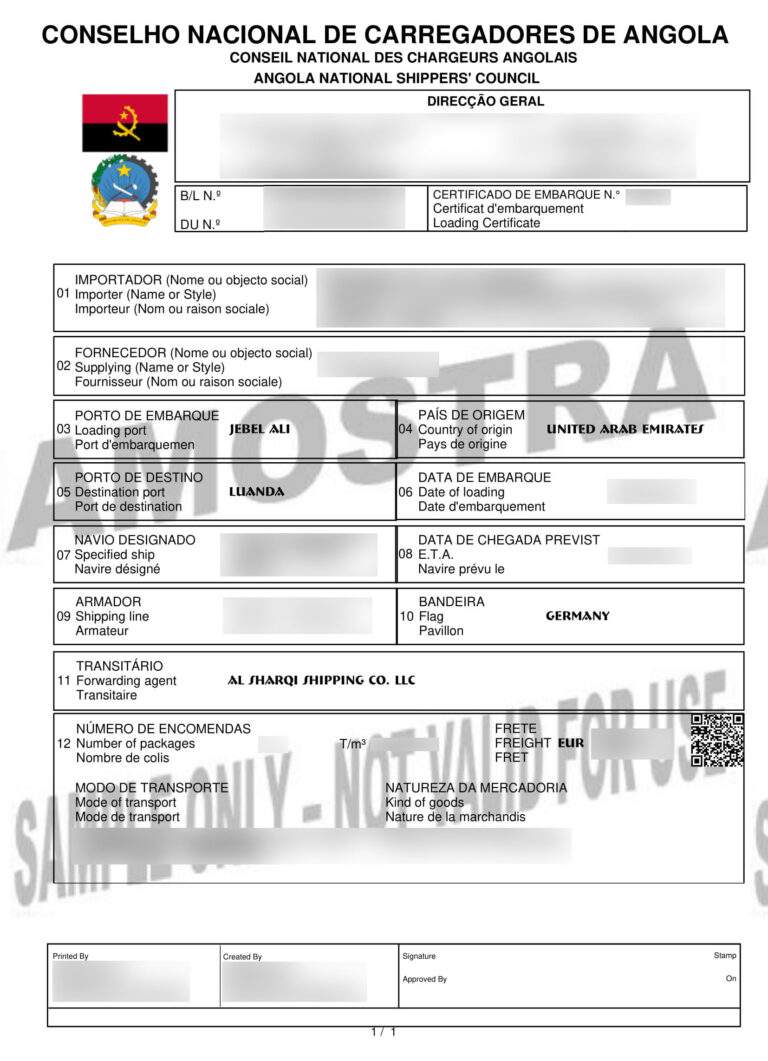
A CNCA (Conselho Nacional de Carregadores) certificate is required for all shipments going to Angola. Shipper/ forwarder must obtain the loading certificate from a CNCA agent, before loading the cargo.
Shipping Ports in Angola
- Luanda
- Cabinda
- Lobito
- Soyo
- Namibe
To know more about Shipping through the above ports into Angola – contact us directly
Pre-Shipment Inspection
As of 12th June 2013, the Angolan authorities decided that imported cargo to Angola no longer requires pre-shipment inspection. Shippers should be explicit with cargo descriptions to avoid delays in customs.
Information and documents required for creating a CNCA certificate
- Bill of Lading (Draft B/L is allowed)
- Commercial invoice incl. freight charges in USD or EURO
- Freight invoice in the same currency (not needed when the freight is specified on the commercial invoice)
- Freight invoice in the same currency (not needed when the freight is specified on the commercial invoice)
- DU form (Documento Único Provisório) provided by importer
- ETS & ETA
- Taxpayer number of importer (mentioned on NIF card)
- Country of Origin of the Cargo
Shipping goods exempted from CNCA certificate
None to be known
Prohibited Goods for Import to Angola
- Used vehicles more than 3 years old
- Heavy vehicles more than 5 years old.
- Genetically modified or transgenic grains and seeds, unless destined for Food Aid programs.
- Non-iodized salt.
- Rubber-made yo-yo water ball toys.
- Food containing saccharine.
- Gambling machines prohibited by law, including roulette.
- Plants coming from areas affected by phylloxera or other epiphytic disease.
- Pornographic material and other derived products.
- Medicines and other generic substances harmful to public health.
- Counterfeit literature and artistic works.
- Used vehicles more than 3 years old
- Counterfeit stamps.
- Counterfeit coffee.
- Live poultry and hatching eggs originated from Asian and European countries, due to outbreaks on highly pathogenic Avian Influenza (bird flu disease).
- Distilled beverages containing essences or recognised harmful products such as absinthe and ether derived products.
- Crates container various types of merchandise and showing a single marking, not presented with a declaration stipulating the quantity and total weight of crates/packs.
- Animals and by products originated from the following areas affected by epizootics: Meat of swine and by products of swine origin from South Africa due to outbreaks of classical swine fever; Live cloven hoofed animals (bovine animals, buffaloes, goats, swine, sheep, antelopes etc.) and animal products thereof, originated from the State of Mato Grosso in Brazil and its neighbouring states like Mato Grosso,Sao Paolo, Parana, Goias and Minas Gerais, due to outbreaks of Foot and Mouth Disease (FMD).
Restrictive Goods Shipping to Angola
- Cigarette papers, and other materials used in cigarette filters – Can only be imported by licence holders.
- Medicines which containers do not state active agents – cannot be imported without authorization from the Angolan Health Ministry.
- Explosives intended for the mining industry.
- Fireworks and explosives cannot be imported without the authorization from the Ministry of Interior.
- Pharmaceutical substances cannot be imported without authorization from the Health Ministry.
- Card games must be sealed as per the regulation enforced.
- Dogs must be immunised against hydrophobia.
- Weapons and ammunition cannot be imported without authorization from the Ministry of Interior
- Radio, transmitters, receivers and other devices cannot be imported without authorization from the National Post Authorities.
- Importation of denatured pure alcohol must be approved by the Ministry of Health.
- Instruments to distill spirits cannot be imported without authorization from the Cabinet.
Charges for Angola CNCA Certificate
For creating an Angola CNCA certificate different rates are applicable. This depends on the Port of Loading and type of shipment, like LCL, FCL, Breakbulk or RORO.