

Role of Customs Broker in Supply Chain & Different Service Levels
A customs broker is a licensed professional or firm authorized to act as an intermediary between importers or exporters and a country’s customs authority, handling declarations, classification, duty calculation, and compliance so that goods move across borders without unnecessary delay. In the UAE, this means working directly with Dubai Customs or the relevant emirate-level authority on your behalf.
This has resulted in Customs Brokers emerging as key agents in the network of supply chain management. And facilitating customs-related activities is just one of the multiple benefits of employing a customs broker.
If you’re shipping into or out of the UAE regularly, understanding exactly what a customs broker does, and which customs broker services actually apply to your business, makes it much easier to decide how much support you need, and from whom.
What Is a Customs Broker?
At its core, a licensed customs broker is authorized by a government customs authority to manage the paperwork, classification, and payments required to legally move goods across a border. That authorization is the key difference between a broker and someone informally helping with paperwork, a broker is accountable to the customs authority for the accuracy of what’s filed.
A broker’s day-to-day work typically includes:
- Reviewing and classifying goods under the correct tariff (HS) code
- Preparing and submitting customs declarations
- Calculating applicable duties, taxes, and fees
- Ensuring shipments meet requirements from other government agencies where relevant (health, agriculture, security)
- Communicating directly with customs officials on inspections, queries, or holds
Customs Broker vs. Freight Forwarder
These two roles get confused constantly, and it matters because they solve different problems. A freight and customs broker relationship often exists side by side on the same shipment, but the responsibilities are distinct:
| Customs Broker | Freight Forwarder | |
|---|---|---|
| Main job | Compliance, classification, and customs clearance | Physical movement, routing, and carrier coordination |
| Who they answer to | Directly accountable to the customs authority for declaration accuracy | Coordinates transport but doesn’t typically handle regulatory filings |
| Core documents | Customs declarations, duty calculations, permits | Bills of lading, shipment tracking, transport contracts |
| When you need them | Any time goods cross a customs border | Any time goods need to be physically transported |
In practice, many logistics providers, including freight forwarding companies in Dubai, offer both functions under one roof, which is worth asking about directly if you’d rather manage one relationship instead of two.
What is the Role of a Customs Broker in Supply Chain Management?
The role of customs broker in supply chain management is best understood as risk reduction. Every shipment that crosses a border carries a chance of delay, misclassification, or penalty, a broker’s job is to reduce that chance to close to zero by handling the parts of the process that require specialist, up-to-date regulatory knowledge.
Core Duties of a Customs Broker
- Customs clearance and documentation — preparing and submitting the paperwork required for a shipment to legally enter or leave the country
- Tariff and duty calculation — classifying goods correctly so duties and taxes are neither over- nor under-paid
- Regulatory compliance — checking a shipment against permits, licenses, and any other-agency requirements before it reaches the border
- Communication with customs authorities — acting as the point of contact if a shipment is queried, held, or inspected
- Trade and tariff advice — flagging opportunities like duty exemptions or preferential origin treatment where they genuinely apply.
What Customs Brokerage Services Cover?
Customs brokerage services aren’t one fixed package, they scale from basic clearance support up to a fully outsourced compliance function. Understanding what falls under each heading helps you scope out exactly what to ask for.
Classification, Documentation & Duty Calculation
This is the baseline of any customs clearance broker engagement:
- HS code classification and product categorization
- Origin determination (including preferential origin under trade agreements, where applicable)
- Customs declaration filing for both imports and exports
- Duty, tax, and fee calculation
Authorizations, Certificates & Related Trade Services
Beyond the basics, a broker (or customs consulting partner) may also handle:
- Applications for special authorizations, customs warehousing, duty exemption approvals, or authorized-status programs
- Tariff classification services for complex or ambiguous product categories
- Route-specific documentation such as an ECTN certificate for shipments to destinations that require one
- Ongoing customs compliance services, including internal process audits and self-assessments
A note on related services: Importer of Record services (and the equivalent Exporter of Record function) sit next to customs brokerage but are a distinct service — an IOR/EOR takes on legal responsibility for an import in a country where the buyer has no local entity, which is a different scope of liability than a broker’s clearance role. If that’s what you’re actually looking for, it’s worth reading about it as its own topic rather than assuming it’s automatically included in a standard brokerage engagement.
What are the Types of Customs Broker Services in the UAE ?
Different businesses require varying levels of customs brokerage services, ranging from basic clearance to full integration with supply chain operations.
1. Standard Customs Brokerage
This service covers basic clearance, documentation, and duty calculations. It is ideal for companies seeking straightforward support in customs import broker operations.
2. Comprehensive Customs Compliance Services
Beyond basic clearance, this includes detailed customs broker expertise in tariff classification, export documentation, and regulatory compliance.
3. Trade Agreement and Duty Optimization
Customs brokers assist businesses in utilizing free trade agreements and identifying duty-saving opportunities. This service ensures customs broker support cost-effective international operations.
4. Supply Chain Integration Services
Some brokers provide full integration into customs logistics operations, coordinating clearance with warehousing, inventory management, and delivery scheduling.
Customs Broker Service Levels: From Consultancy to Full Declaration Support
Not every business needs the same depth of support, and this is where a trusted customs broker relationship should flex to match your situation rather than offering a single fixed service.
| Service Level | What It Covers | Best Suited For |
|---|---|---|
| Consultancy | On-site or remote advice on origin determination, HS classification, licensing, and audit support | Businesses that need expert input on specific decisions but manage day-to-day filing themselves |
| Senior Consultancy | Deeper advisory support drawing on hands-on experience with complex or high-stakes compliance questions, such as Authorized Economic Operator (AEO) process descriptions | Businesses navigating a specific complex application or compliance event |
| Customs Management | A broker who oversees the entire customs function or team, effectively acting as an outsourced customs manager | Businesses building or replacing an internal customs department |
| Declaration | On-site or system-integrated support handling day-to-day import, export, and transit documentation | Businesses with high shipment volume needing ongoing operational support |
This tiered structure means you’re not stuck choosing between “handle it all yourself” and “hand over everything” — you can bring in exactly the level of support a given shipment or period of growth actually requires.
Is Using a Customs Broker Mandatory?
This is a genuinely useful question that most generic guides skip. Internationally, the World Customs Organization’s Revised Kyoto Convention and the World Trade Organization’s Trade Facilitation Agreement both establish the principle that using a customs broker should be optional, traders should have the choice to deal with customs directly or through a third party. In practice, though, a number of countries still require the use of a licensed broker for at least some categories of shipment, so “optional in principle” doesn’t always mean “optional in your specific market.”
In the UAE, customs brokerage is a regulated activity. Acting as a customs import broker or clearing agent requires registration with the relevant customs authority, for shipments through Dubai, this means registering with Dubai Customs via the Dubai Trade platform under a trade license that carries the correct “Customs Broker” or “Clearing Agent” activity. Each emirate has its own customs department, so the exact registration path can differ slightly depending on where a shipment is entering the country.
Verification flag: Exact registration fees, required documents, and processing steps should be confirmed directly with Dubai Customs or the relevant emirate authority before being published as fixed figures, since administrative requirements are updated periodically.
For an individual business deciding whether to hire a broker rather than become one, the practical answer is closer to a judgment call: low-volume, straightforward shipments may be manageable in-house, while regular, high-volume, or multi-country shipments are where a broker’s expertise reliably pays for itself.
Why Businesses Use a Customs Broker in the UAE?
- Faster clearance — accurate, complete documentation avoids the delays that come from queries or holds
- Reduced compliance risk — a broker’s ongoing exposure to changing regulations reduces the chance of fines or seizure
- Cost efficiency — correct classification and awareness of duty-saving mechanisms (like free trade agreement provisions) can lower landed cost
- Access to customs broker expertise without building that specialism in-house
- One point of contact for anything customs authorities raise about a shipment
Common Challenges in Customs Brokerage
Working with (or evaluating) a broker isn’t entirely friction-free, and it’s worth knowing where things commonly go wrong:
- Evolving regulations — trade rules and classifications change, and a broker’s value depends on staying current
- Documentation errors — a single mismatched detail between an invoice, packing list, and declaration is one of the most common causes of a hold
- Overreliance without internal oversight — outsourcing customs entirely without any internal checks can leave a business unaware of what’s actually being declared on its behalf
How to Find and Choose a Customs Broker in the UAE?
If you’re trying to find a customs broker rather than just understand the role, a short checklist makes the decision more concrete:
Verify licensing/registration with the relevant customs authority (Dubai Customs or the applicable emirate department), don’t take this on trust
Check industry-specific experience — a customs logistics broker familiar with your product category and trade lanes will spot issues generic experience misses
Ask which service level you actually need — consultancy, senior consultancy, management, or full declaration support (see the table above)
Confirm technology capability — can they file digitally and integrate with your own systems, or is everything manual?
Ask whether services are bundled — an international customs broker that also offers freight forwarding and warehousing can simplify coordination if you’d rather manage fewer vendors
Get a clear scope on customs broker fees upfront — ask what’s included, what’s billed separately, and whether pricing is per shipment or retainer-based.
How Technology Is Changing Customs Brokerage?
Much of UAE customs administration now runs through online customs broker platforms rather than paper filing, Dubai Customs’ Mirsal 2 system and the wider Dubai Trade portal handle registration, declarations, and payments digitally. In practice, this means:
- Faster submission and fewer manual handling delays
- Easier tracking of a declaration’s status
- Digital certificates required for anyone submitting declarations on a company’s behalf
For businesses, this makes a broker’s system integration capability, not just their advisory knowledge, a genuine differentiator worth asking about.
Our Customs Brokerage Services at Al Sharqi
Al Sharqi Shipping Co LLC provides customs brokerage services across all four service levels described above, from one-off consultancy on classification and origin questions through to fully outsourced declaration management for high-volume shippers. As a freight forwarding company in Dubai already handling ocean, air, and land freight, Al Sharqi’s brokerage team works alongside the same shipments end to end, rather than as a separate, disconnected function.
A broad description of our services includes;
- Classification & HS Codes – classifying products and articles, defining HS codes
- Origin Determination – determining origin of goods, preferential & non-preferential origin, anti-dumping duty
- Authorizations – applying for AEO, Customs warehousing, process description self-assessments, dual-use (export control), duty exemption approvals
- BTI Applications – applying for binding tariff information
- Audits – auditing internal processes, rewriting processes, route map, self-assessments
- Planning & Review Services – pre-importation, post-entry compliance
Al Sharqi customs brokers provide services in any of the following four ways:
Consultancy
Having undergone the required training and acquired a vast amount of knowledge, our Customs Consultants are fully able to deal with all your issues regarding customs activities. And we can provide this service either on-site or from a remote location.
Essentially, our Consultants can help determine the origin of goods, non-preferential and preferential origin. Their adequate knowledge of HS codes ensures they can process a BTI application for you.
In addition, they can apply for, manage, and audit licenses, as well as provide audit support for your company. In all, our Customs Consultants evaluate all working procedures and introduce better organization to properly facilitate all customs activities.
Senior Consultancy
Through dedicated and continuous practice, our Senior Consultants have acquired valuable experience while working in the world of customs-related activities. They have done this with hands-on operations in solving issues and developing a wide network of satisfied clients.
With this knowledge, our Senior Consultants are well-equipped to advise you concerning all the complex areas involved in complying with Customs and Trade laws. For example, appropriate process descriptions within your company when applying to be an Authorized Economic Operator.
Customs Management
As Customs Managers, our Customs personnel can oversee the entire processes and teams involved in carrying out customs activities. As well as specializing in all customs-related activities, they are well-versed in compliance procedures and international trade activities.
Primarily, our Customs Managers can assist on an ongoing project or serve as a temporary replacement. And with relevant industry knowledge and skills, they can help you set up your own Customs compliance department or build up an existing team.
Declaration
When dealing with issues concerning Customs declaration, our Customs Declarants ensure you have enough internal support throughout the process. That is, they can be made available on-site at your company to provide additional knowledge and operational capacity.
All important documents covering import, export, and transit procedures can be delivered daily. And you don’t have to worry since your own system will be utilized in processing all this documentation.
Conclusion
A customs broker in supply chain management plays a critical role in ensuring smooth, compliant, and cost-effective trade operations. They bridge the gap between businesses and customs authorities, manage complex documentation, and optimize duty payments. With UAE’s growing role as a regional trade hub, leveraging expert customs broker services is essential for businesses seeking efficiency, compliance, and competitive advantage.
At Al Sharqi, we handle your shipment with care and only seek to assist in growing your business. Contact us for more information about how we can help your business.
Frequently Asked Questions (FAQs)
A licensed professional or firm authorized by a customs authority to handle declarations, classification, and duty payments on behalf of importers and exporters.
A customs broker handles compliance and clearance; a freight forwarder handles the physical transport and routing of goods. Some providers offer both.
Acting as a broker requires registration with the relevant customs authority. For businesses hiring one, it isn’t strictly mandatory for every shipment, but is strongly advisable for regular, high-volume, or complex trade lanes. (Confirm current requirements for your specific case with Dubai Customs or the relevant emirate authority.)
Businesses need value-added logistics services to reduce manualThis varies by service level (consultancy vs. full declaration management), shipment volume, and complexity — it’s best confirmed with a direct quote rather than a fixed number, since scope differs case by case. work, improve order accuracy, speed up fulfillment, manage returns better, and create a stronger customer experience.
Verify their registration/licensing, check relevant trade-lane experience, confirm which service level fits your needs, and ask about technology/system integration — see the checklist above.
Yes, in some cases, through accurate classification, correct application of preferential origin rules, or identifying applicable duty exemptions. This depends entirely on the specific goods and trade lane involved.
Al Sharqi Shipping and customs broker services offer accurate customs clearance, tariff optimization, compliance advisory, documentation support, and integrated logistics management are considered best for UAE imports.
Apply through UAE customs authorities, complete the required training and certification, meet financial and legal requirements, and pass any examinations mandated for customs brokerage.
Our customer service team is happy to assist you with planing your next booking.

Related Articles
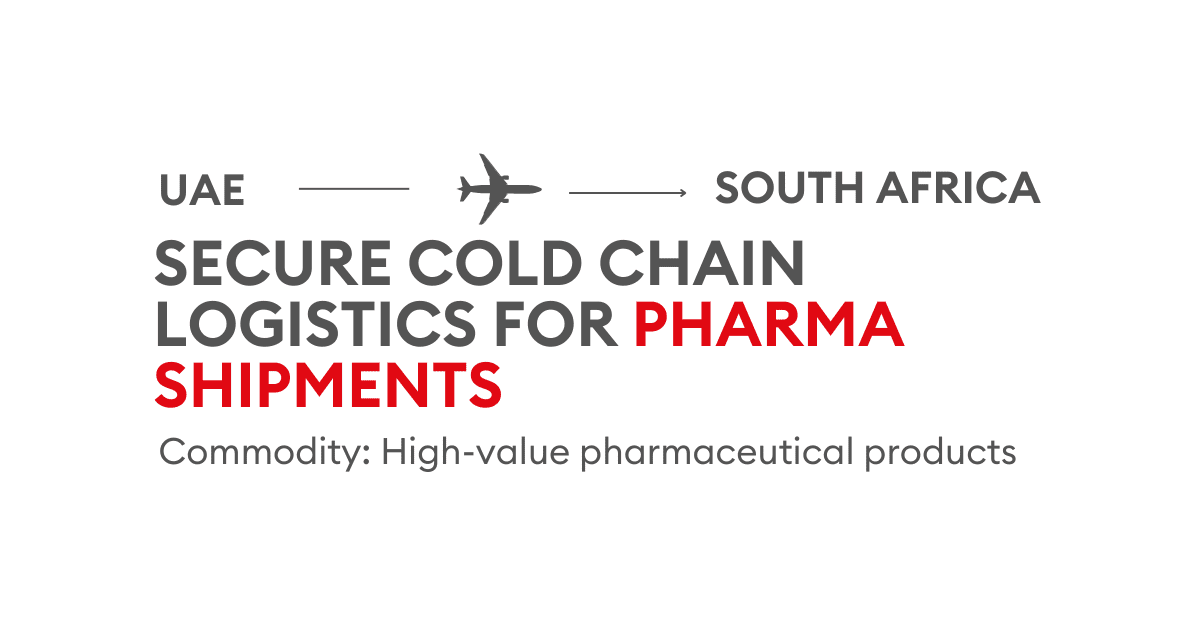
Reliable Temperature-Sensitive Pharmaceutical Delivery from UAE to South Africa | Case Study
Summary Al Sharqi provided a seamless logistics solution for the transportation of temperature-sensi
Handling Used Car Imports and Re-Exports from UAE to Kenya | A Case Study
Tagline:Expert Customs Handling and Secure Ocean Freight Summary Our client required a seamless and
Specialized Solutions for Exporting Industrial Waste from UAE | A Case Study
Tagline: Ensuring Compliance and Efficiency in Chemical Logistics Summary Managing the export of Bul
Post a comment
You must be logged in to post a comment.