



An Ultimate Guide About Warehouse Barcoding
Warehouse barcoding is the practice of using a warehouse barcode on labels and scanners to identify, track, and record inventory items, bins, and transactions inside a warehouse — feeding that data directly into a warehouse management system (WMS) or inventory platform instead of entering it by hand. It’s the backbone of accurate, fast warehouse operations, and it’s especially important for 3PL and freight-forwarding businesses in the UAE that handle inventory for multiple clients under one roof. By implementing warehouse barcoding systems, businesses can streamline stock management, reduce human error, and improve order fulfillment accuracy.Â
This guide is built as practical warehouse barcoding for beginners and experienced operators alike, covering how warehouse barcoding actually works, the different warehouse barcodes you’ll encounter, how to use warehouse barcoding day to day, how it compares to RFID, and how to implement warehouse barcoding step by step.
What Is Warehouse Barcoding and How Does It Work?
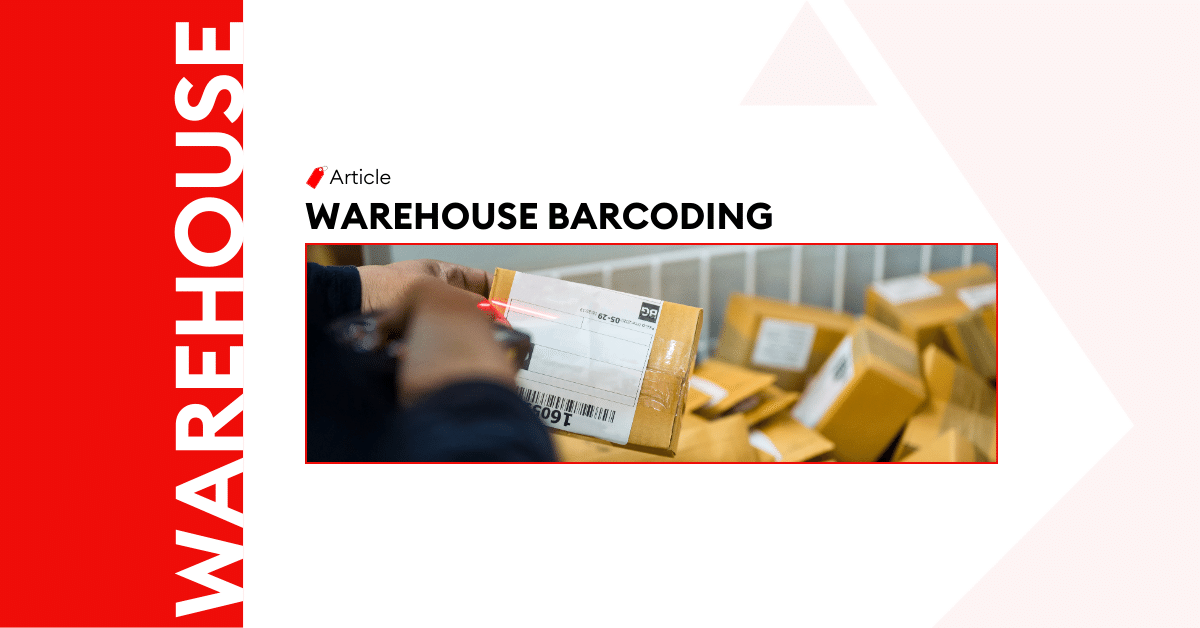
Warehouse Barcoding is the practice of assigning machine-readable codes to products, pallets, racks, or bins within a warehouse to improve inventory tracking and operational efficiency. These codes encode information such as SKU numbers, batch numbers, production dates, and storage locations, which can then be read by a warehouse barcode scanner or mobile scanning device.Â
How a Scan Populates Your Inventory System?
Barcoding only becomes useful once that scanned data lands somewhere. In modern warehouse barcoding systems, a single scan can do more than just “look up” an item:
- Populate multiple fields at once — a single scan of a GS1-style barcode can extract the item number, lot number, and serial number together instead of requiring three separate lookups
- Add items directly to transactions — scanning adds items to sales orders or receives them on a purchase transaction without manual entry
- Process orders in bulk — scanning transaction barcodes to bulk receive, fulfill, pick, pack, ship, or bill orders is central to inventory management barcoding in any WMS
- Support multi-client accuracy — this same workflow is what makes warehouse inventory barcoding reliable enough for accurate order fulfillment across several client accounts at once
How Barcoding Connects to Bin Management and Inventory Counts?
Barcoding also connects to how items are organized once they’re inside the warehouse. Two features typically pair with barcode scanning:
- Bin management — every item is tied to a specific storage location, so staff can find stock for picking or know exactly where to put away newly received items without guesswork
- Inventory counting — cycle counts and physical counts get recorded by scanning instead of writing numbers down by hand, often in combination with bin tracking
What are the Types of Barcodes Used in Warehouses ?
The main types of warehouse barcodes generally fall into two categories: 1D (linear) and 2D. Each has a different structure, data capacity, and best-fit use case.
1D (Linear) Barcodes
A 1D barcode is the familiar series of vertical black lines and white spaces — the format most people recognize from retail products.
- How it’s read: A laser or linear-imager warehouse barcode scanner decodes the width and spacing of the lines into a numeric or alphanumeric code
- What it typically represents: A product ID, batch number, or location code
- Common warehouse uses: Item labels, shelf/bin labels, and basic transaction tracking
- Why it’s popular: Inexpensive to print and universally supported by most scanners
2D Barcodes
A 2D barcode (such as a QR code or Data Matrix) stores data in a two-dimensional pattern of squares, dots, or other shapes rather than a single line of bars — allowing it to hold more information while taking up less physical space than an equivalent 1D barcode.
- What it can hold: More than just a product number — for example, a lot number, expiration date, and serial number in a single label
- Best fit: Warehouses handling regulated, perishable, or serialized goods
- How it’s read: Requires an imager-based scanner (a camera-style scanner), not the laser scanners traditionally used for 1D codes alone
- Where the choice gets made: The decision between 1D and 2D is usually configured inside your warehouse barcode software or WMS setup, since that determines which data fields a scan can populate
What are the Common Barcode Symbologies Used in Warehouses?
Within the 1D and 2D categories, a few specific barcode formats (“symbologies”) come up most often on a warehouse floor:
| Barcode Type | Typical Use | Strength | Notes |
|---|---|---|---|
| Code 39 | General inventory and warehouse labeling | Simple alphanumeric encoding | Easy to generate; suitable for basic stock tracking |
| Code 128 | High-density SKU encoding | Compact, versatile | Ideal for longer alphanumeric data or smaller labels |
| QR Code | Mobile scanning, dynamic inventory tracking | High data capacity | Can store URLs, batch info, or links to WMS records |
| GS1-128 | Global logistics and compliance | Standardized format | Often used for international shipments and integrating with ERP/WMS systems |
(This table reflects general, widely-used industry symbologies rather than a single cited source; confirm compatibility with your specific scanner and WMS vendor before standardizing on one format.)
GS1 Standards: Why Barcode Format Matters for Cross-Border Trade
GS1 is the global standards body behind the barcode formats used across retail and logistics, including the GTIN (Global Trade Item Number) used to uniquely identify products. GS1 barcodes are designed so that identifiers and attributes — like products, shipments, locations, serial numbers, batch numbers, and dates — can be recognized consistently by supply chain partners such as retailers, manufacturers, and transport providers. Beyond GS1-128 (shown in the table above), GS1 covers a few other formats worth knowing:
- Standard linear barcodes — encode a product’s GTIN for general identification
- GS1 DataBar — can hold additional attributes, such as the weight of fresh goods
- ITF-14 — a versatile format often used specifically in distribution and warehouse environments rather than at the retail shelf
For a UAE freight-forwarding or 3PL operation handling goods for multiple retailers or exporters, using GS1-compliant barcodes matters because it keeps your warehouse’s item identification compatible with what your clients, carriers, and destination markets already use. (Note: specific UAE regulatory or GS1-membership requirements should be verified directly with GS1 UAE or a compliance advisor — this article does not state any UAE-specific legal requirement.)
1D vs 2D vs RFID: Quick Comparison
| Feature | 1D Barcode | 2D Barcode | RFID |
|---|---|---|---|
| Data capacity | Low (usually just an ID number) | High (can include lot, date, serial number) | High (varies by tag) |
| Scanning method | Laser or linear imager, line of sight required | Imager/camera scanner, line of sight required | Radio frequency, no line of sight needed |
| Read speed per item | One item at a time | One item at a time | Can read multiple tagged items at once (e.g., on a pallet) |
| Typical cost | Low | Low–moderate | Higher (tags + readers) |
| Best fit | High-volume, simple item/location tracking | Items needing multiple data points (lot, serial, expiry) | Large warehouses with high item volume or a need for bulk/real-time reads |
(Cost figures are relative, not absolute — exact pricing depends on hardware vendor and tag type and should be confirmed with a supplier before budgeting.)
Barcoding vs RFID: Which Does Your Warehouse Need?
Weighing RFID vs barcode in warehouse operations is one of the most common questions once a business moves past manual tracking. Barcoding and RFID aren’t necessarily competing choices — many operations use both. Start by asking:
- How many items do you need to track?
- How much staff time is currently spent on manual counts?
- What level of accuracy do you need?
- Do you need real-time visibility into stock levels?
Barcoding
- Requires a direct line of sight — a staff member has to point a scanner at each label individually
- Works well for small to mid-sized warehouses or operations where items pass through defined scan points (receiving, packing, shipping)
RFID
- Removes the line-of-sight requirement — a reader only needs to be within range of a tagged item
- Can read several tagged items on a pallet at once instead of scanning them one by one
- Tends to pay off in larger, high-throughput warehouses where line-of-sight scanning becomes a bottleneck, though it typically costs more to deploy than barcoding
5 Key Components of a Warehouse Barcode System
A robust warehouse barcode system is more than just labels; it requires careful integration of hardware, software, and data management to maximize the benefits. Here are the key components below.Â
- Barcodes themselves – Labels encode product information. Durable labels ensure readability in harsh warehouse environments and support long-term inventory tracking.Â
 - Scanners – Handheld, fixed, or mobile warehouse barcode scanners allow rapid and accurate capture of item data during receiving, picking, or shipping.Â
 - Label printers & durable labels – Industrial-grade printers produce warehouse barcode labels that withstand temperature changes, moisture, and abrasion.Â
 - Warehouse Management Software (WMS) integration – Scanned data must sync with inventory systems for real-time updates, reporting, and stock reconciliation.Â
 - Data standards & accuracy checks – Ensuring barcodes adhere to standards (e.g., GS1, Code 128) prevents scanning errors and supports compliance. Regular audits of scanned data maintain integrity across operations.
A well-implemented system enables inventory management barcoding to minimize stock discrepancies and reduce order errors. Â
4 Benefits of Warehouse Barcoding
Implementing warehouse barcoding systems brings measurable improvements in operational efficiency, inventory accuracy, and overall warehouse performance. These benefits extend across picking, packing, stock management, and reporting, making barcoding essential for modern logistics.Â
1. Faster & More Accurate Picking and Packing
Barcodes reduce the reliance on manual entry and visual checks, significantly decreasing human errors. With warehouse inventory barcoding, staff can scan items instantly, verify SKU numbers, and confirm order details, leading to faster order fulfillment.  Businesses can track pick-and-pack times, optimize labor, and measure improvements in throughput, demonstrating clear ROI from warehouse barcode solutions.Â
2. Real-Time Inventory Visibility
Tracking inventory with barcodes provides up-to-the-minute information on stock levels, item locations, and movements across zones. This allows warehouse managers to forecast demand, plan replenishments, and reduce stockouts or overstock situations. When integrated with WMS, warehouse barcoding systems enable automated reporting, cycle counts, and live dashboards for better decision-making across supply chains.Â
3. Lower Operational Costs
Fewer errors translate directly into cost savings. Mis-picked items, misplaced stock, or incorrect shipments can be costly, but warehouse barcode systems minimize these risks, reducing rework, audits, and manual data reconciliation. Efficient scanning and inventory management barcoding reduce paper-based processes and streamline operations, making warehouses more profitable over time.Â
4. Improved Traceability and Compliance
Barcodes enable complete traceability of goods from receiving to shipping. Businesses can track individual SKUs, batches, or lots at every step, which supports compliance with safety, quality, and regulatory standards. This is particularly important for industries like food, pharmaceuticals, and electronics.
How to Choose the Best Barcoding System for Your Warehouse?
Selecting the right warehouse barcoding system is critical to ensuring efficiency, accuracy, and scalability. To make the right choice, businesses must reflect on the following.Â
- Define your needs: Determine the volume of inventory, SKU complexity, and whether you need multi-zone or multi-site tracking. High-volume warehouses may require advanced warehouse barcode software and automated scanning equipment.Â
 - Budget consideration: Include the cost of warehouse barcoding equipment, labels, scanners, printers, and software. Calculate ROI by factoring in labor savings and reduced errors.Â
 - Compatibility with WMS: Ensure the barcode system integrates seamlessly with your warehouse management software or ERP system to maintain real-time inventory visibility and automating warehouse with barcoding.Â
- Evaluate vendor support: Reliable support for setup, maintenance, and troubleshooting ensures uninterrupted operations. Vendors should offer training for warehouse barcoding for beginners.Â
 - Warehouse environment: Consider lighting, temperature, dust, or humidity conditions. Durable warehouse barcode labels and industrial-grade scanners may be required in challenging environments.Â
 - Cost and ROI: Choose a system that balances affordability with efficiency, ensuring long-term value and scalability as operations grow.Â
How to Implement Barcodes in Your Warehouse (Step-by-Step)?
A well-planned implementation ensures that warehouse inventory barcoding delivers maximum efficiency.Â
Here are quick steps to follow.
1. Assess Warehouse Needs
Map out workflows, item locations, and SKU complexity. Determine which areas require scanning and warehouse barcode solutions.Â
2. Choose the Right Barcode Types & System
Select types of warehouse barcodes that match your data requirements, scanning frequency, and equipment compatibility.Â
3. Design Barcode Labels
Decide what information appears on labels (SKU, batch number, location, and expiry if applicable) and print using durable warehouse barcode printers.Â
4. Set Up Scanning Hardware & Software
Install warehouse barcode scanners and integrate with WMS to capture data in real time. Configure scanning workflows for receiving, picking, and shipping.Â
5. Map Barcode Locations
Define zones, aisles, racks, and bins to streamline picking. Ensure labels are easily accessible and visible for efficient barcode scanning in logistics.Â
6. Test & Pilot
Run a small batch to check readability, data capture, and WMS integration. Identify errors and refine processes before full rollout.Â
7. Train Your Team
Provide hands-on training for scanning, troubleshooting, and label handling to ensure staff adoption.Â
8. Go Live & Monitor Performance
Track KPIs such as pick-and-pack speed, error rates, and inventory accuracy. Continuously improve workflows to maximize warehouse efficiency with barcoding.Â
Key Milestones / Timeline to Track the Success of Implementation
A structured rollout of warehouse barcoding systems ensures smooth adoption, minimal disruption, and measurable efficiency gains. Breaking the implementation into phases helps track progress, address issues early, and ensure integration with warehouse barcode software and WMS systems.Â
Phase 1 (Weeks 1-4): Planning, Workflow Mapping, and Data Cleanup
- Assess current warehouse workflows, inventory locations, and SKU complexity.Â
- Identify items for warehouse inventory barcoding and map scanning points (receiving, picking, packing, shipping).Â
- Clean and standardize item data to ensure accuracy during barcode generation.Â
- Determine hardware needs (scanners, printers) and preliminary warehouse barcoding equipment requirements.
Phase 2 (Weeks 5-8): Hardware Procurement and Label Testing
- Procure warehouse barcode printers, durable labels, and warehouse barcode scanners.Â
- Test label readability, durability, and compatibility with scanners.Â
- Configure warehouse barcode software to integrate with WMS for real-time tracking.Â
- Train a small group of staff on scanning techniques and data entry procedures.Â
Phase 3 (Weeks 9-12): Pilot Program in a Controlled Area
- Implement barcoding in a single warehouse zone, such as receiving or outbound shipping.Â
- Monitor barcode scanning in logistics for accuracy, speed, and error rates.Â
- Identify bottlenecks, equipment issues, or software integration problems before full-scale rollout.Â
- Collect feedback from staff to refine workflows and label formats.Â
Phase 4 (Months 3-6): Full Warehouse Rollout and WMS Integration
- Expand warehouse barcoding systems across all zones, including picking, packing, and storage.Â
- Ensure all warehouse inventory barcoding data is synchronized with WMS for complete visibility.Â
- Implement scanning protocols for ongoing operations and connect all scanners and printers to central software.Â
- Conduct ongoing training sessions to reinforce proper scanning, labeling, and handling practices.Â
Phase 5 (Ongoing): Monitor KPIs and Provide Continuous Training
- Track key performance indicators like pick-and-pack speed, scan accuracy, inventory reconciliation, and error rates.Â
- Conduct regular warehouse barcode audits to maintain system accuracy and reliability.Â
- Update warehouse barcode labels, software, and procedures as inventory and warehouse layouts change.Â
- Provide refresher training for staff and new employees to ensure consistent use of warehouse barcoding systems.Â
Top 6 Warehouse Barcoding Challenges and How to Solve Them
Even with robust warehouse barcoding systems, warehouses often encounter implementation challenges. Identifying these issues early and addressing them systematically ensure s smooth operations and maximizes the benefits of barcoding in warehouses.Â
1. Poor label printing or fading
Labels that wear out quickly can slow down barcode scanning in logistics and cause errors. Use industrial-grade warehouse barcode labels with high durability and consider protective coatings for harsh environments.
2. Incorrect scanning data
Mis-scanned items create inventory discrepancies. Implement routine audits and recalibrate warehouse barcode scanners regularly to maintain data accuracy. Integrating checks with WMS reduces errors.
3. Worker adoption/resistance
Staff may resist new workflows. Provide training tailored for warehouse barcoding for beginners, showing how barcodes speed up picking, packing, and inventory checks. Reinforce adoption with incentives and performance feedback.
4. Connectivity issues
Wireless or network problems can prevent real-time updates. Ensure scanners and warehouse barcode software have stable network access and redundant connections for uninterrupted operation.
5. Integration errors with WMS
Misalignment between barcoding hardware and WMS can cause data mismatches. Test software compatibility thoroughly, including label formats and scan data, before full rollout.
6. Low label durability in harsh environments
Extreme temperatures, moisture, or abrasion can degrade labels. Use weather- or chemical-resistant warehouse barcode labels and regularly inspect them for wear, especially in cold storage or heavy manufacturing zones.
Warehouse Barcoding 7 Best Practices for Performance
To ensure your warehouse barcoding systems deliver maximum efficiency and accuracy, follow these best practices:Â
- Standardize barcode formats: Consistent barcode symbology across inventory prevents scanning errors and improves integration with warehouse barcode software.Â
- High-quality printing: Use durable labels and industrial-grade printers to maintain scan reliability and reduce downtime.Â
- Regular system audits: Periodically check scanners, labels, and WMS data to catch errors before they impact operations.Â
- Continuous staff training: Train employees on scanning techniques, troubleshooting, and warehouse barcode solutions, reinforcing proper usage and adoption.Â
- Monitor KPIs:Â Track pick accuracy, scan success rates, and inventory reconciliation performance to measure efficiency improvements.Â
- Update software and labels: Adjust barcode software, label formats, and printing protocols as inventory or warehouse layout changes.Â
- Encourage accountability: Use incentives, scorecards, and performance monitoring to encourage correct usage of warehouse barcoding equipment and best practices.
Following these guidelines ensures that barcoding not only improves tracking inventory but also enhances operational efficiency, reduces errors, and supports scalable warehouse growth.Â
Warehouse Barcoding for UAE 3PL and Freight Operations
For freight forwarders and 3PL companies in UAE, barcoding isn’t just an internal efficiency tool — it’s what makes multi-client warehousing manageable. This is where barcode scanning in logistics proves its value, letting a single facility:
- Separate stock by client — track ownership of goods within a shared, multi-client facility
- Track cross-border movement — follow goods in and out for cross-border GCC shipments
- Hand off clean records — give each client auditable data without manual reconciliation
- Answer “where is my stock, right now” — a question that matters especially inside a bonded warehouse or in time-sensitive freight environments
GS1-compliant barcoding, tied into bin management and inventory management, is what gives a business offering 3PL services in the UAE this level of traceability.
(Note: any specific claims about Al Sharqi Shipping’s own warehouse locations, current barcode/WMS setup, or GS1 membership status should be confirmed internally before publishing, as this guide does not assume specific internal systems.)
How Al Sharqi Shipping Can Help You Implement Warehouse Barcoding?
Al Sharqi offers comprehensive services for automating warehouse with barcoding.Check out the services below.Â
- Inventory management support: Analyze workflows and optimize warehouse inventory barcoding.Â
- Technology setup & WMS integration: Install scanners, printers, and warehouse barcode software for real-time tracking.Â
- Ongoing support & training: Ensure staff adoption, troubleshoot issues, and continuously optimize warehouse barcoding systems.
Partnering with experts like Al Sharqi Shipping ensures smooth implementation, reduces operational errors, and maximizes the benefits of barcoding in warehouses.Â
Conclusion
Warehouse barcoding is a transformative technology for modern warehousing, enabling real-time inventory visibility, faster order fulfillment, and operational efficiency. By understanding types of warehouse barcodes, selecting the right solutions, and following best practices for implementation and maintenance, businesses can reduce errors, improve compliance, and streamline logistics workflows.Â
Need Barcoded, Trackable Warehousing in the UAE? If you’re weighing whether to build a barcoding system in-house or hand warehousing to a partner who already runs one, the Al Sharqi warehouse Dubai and 3PL storage setup is built to give you clear, trackable inventory from receiving through dispatch. Request a quote or book a consultation to talk through your warehouse and freight requirements, or message us on WhatsApp for a quick answer.
Frequently Asked Questions (FAQs)
Warehouse barcoding is the practice of labeling items, bins, or pallets with machine-readable codes to track inventory accurately and efficiently. It replaces manual recording, reducing errors, and improving inventory visibility.Â
Warehouse barcoding is used to identify and track inventory items, storage bins, and transactions (receiving, picking, packing, shipping) by scanning a machine-readable label instead of manually recording data.
The main purpose is to streamline inventory tracking, reduce human errors, and improve operational efficiency throughout the warehouse. Barcoding also provides accurate data for reporting and auditing.Â
Benefits include faster picking and packing, real-time inventory visibility, reduced operational costs, and improved traceability and compliance. Barcoding also enhances overall warehouse productivity.Â
Start by defining SKUs, selecting the appropriate barcode type, printing durable labels, and integrating scanners with your WMS. Map item locations and workflows for accurate tracking.
Absolutely, barcoding integrates with automated systems like conveyors, robots, and WMS for streamlined operations and supports advanced automation initiatives in warehouses.Â
Neither is universally “better”, it depends on warehouse size, item volume, and whether you need to read multiple items at once. Barcoding is generally lower-cost and sufficient for many operations; RFID tends to pay off in larger, high-throughput warehouses where line-of-sight scanning becomes a bottleneck.
Our customer service team is happy to assist you with planing your next booking.
Related Articles
Optimize Warehousing, Fulfillment and Shipping CostÂ
In today’s fast-paced business environment, efficient distribution and shipping play a crucial

Frozen and Chilled Storage Warehouse in DubaiÂ
Dubai’s hot climate means efficient storage is a prominent concern for manufacturers and selle

Keeping Your Food Safe with Food Grade Warehouse in Dubai
Currently, the United Arab Emirates (UAE) relies on other countries for the bulk of its food supplie


Post a comment
You must be logged in to post a comment.